In this edition, we visit one of Europe’s cultural melting pots, Türkiye. Guided by Turkish surfing pioneer Tunc Ucyildiz, we explore the fascinating history of surfing in the country and whether or not you should be swapping the Atlantic for the Black Sea.
What comes to mind when you hear the word Turkey?
For the record, we’re talking about the country of Turkey, which, since 2022, has now been officially referred to as Türkiye. Known for its striking mixture of history, culture, and natural wonder, it’s the gatekeeper between Europe and Asia, where famous ruins, colourful markets, and breathtaking architecture combine. But still, it lies far down the list of places that spring to mind when thinking of surf destinations.
Astonishingly, Türkiye boasts over six thousand beaches, more than eight thousand kilometres of coastline, and is surrounded by four different seas, making it a real wonder how people haven’t fully tapped into its surfing potential.
Well, that’s not entirely true — surfing has always existed in Türkiye, just not in the modern form as we know it today.
The origins go back hundreds, if not thousands of years, where coastal villages along the Black Sea would perform the now-ancient tradition of Viya surfing.
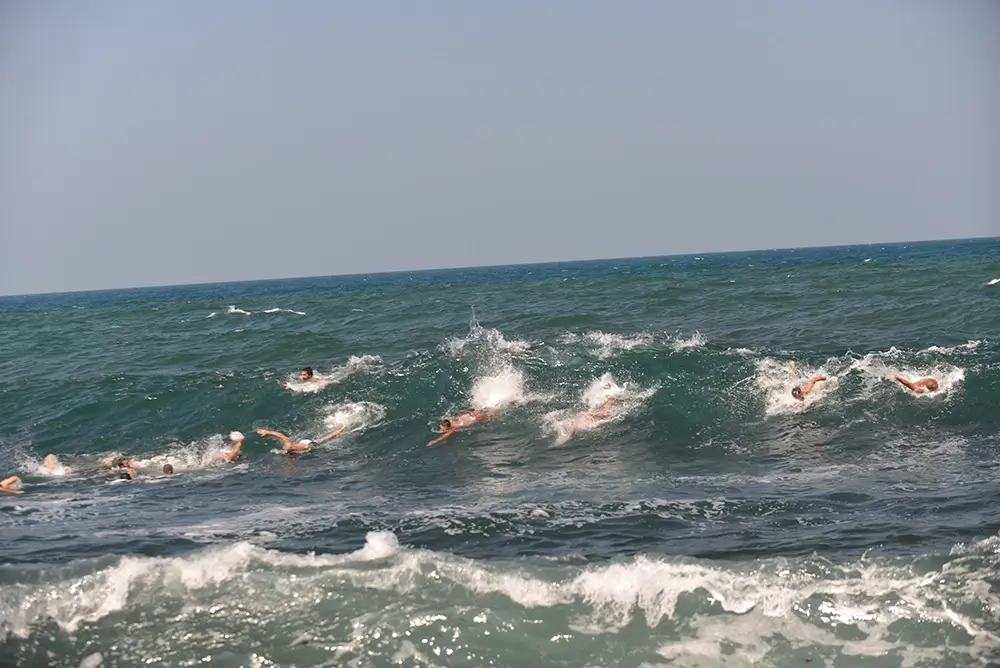
Viya is a traditional form of bodysurfing that is native to the Black Sea coast of Türkiye. This ancient sport was introduced by the Pontic Greeks, an ethnic subgroup indigenous to the Pontus region on the northeastern shores. The Pontic Greeks settled on the Black Sea around 800 BC, meaning the Viya tradition could potentially be the very first form of surfing to ever exist.
Turks still practice Viya to this day, most prominently at a small town situated near the capital, Istanbul, called Rumeli Feneri. It’s known to be a heavily localised spot, with visitors often having to seek permission from older Viya surfers to enter the water. Localism is as ancient as surfing, after all.
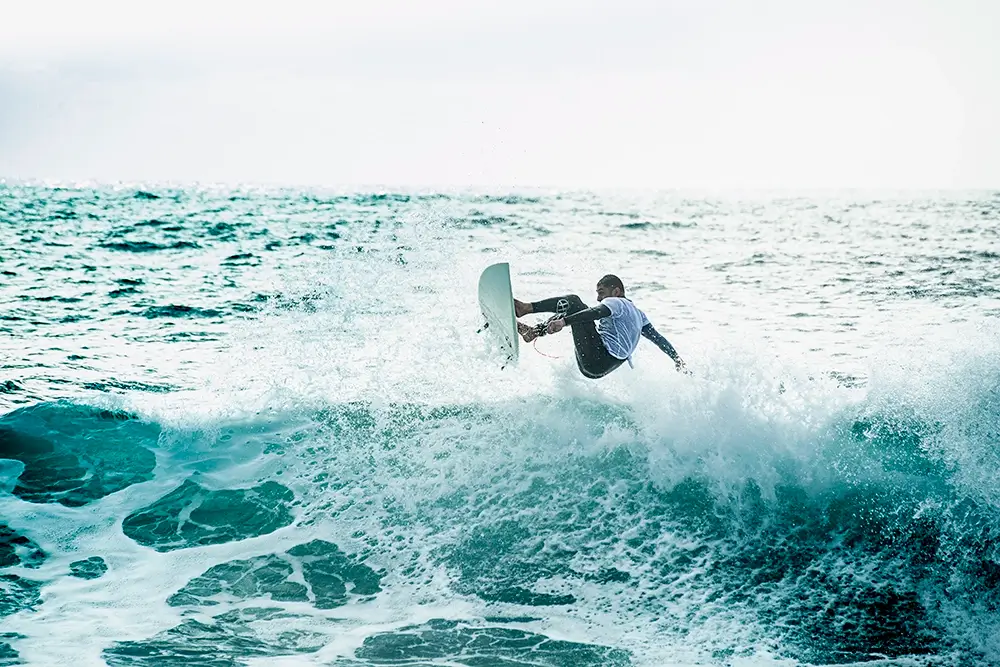
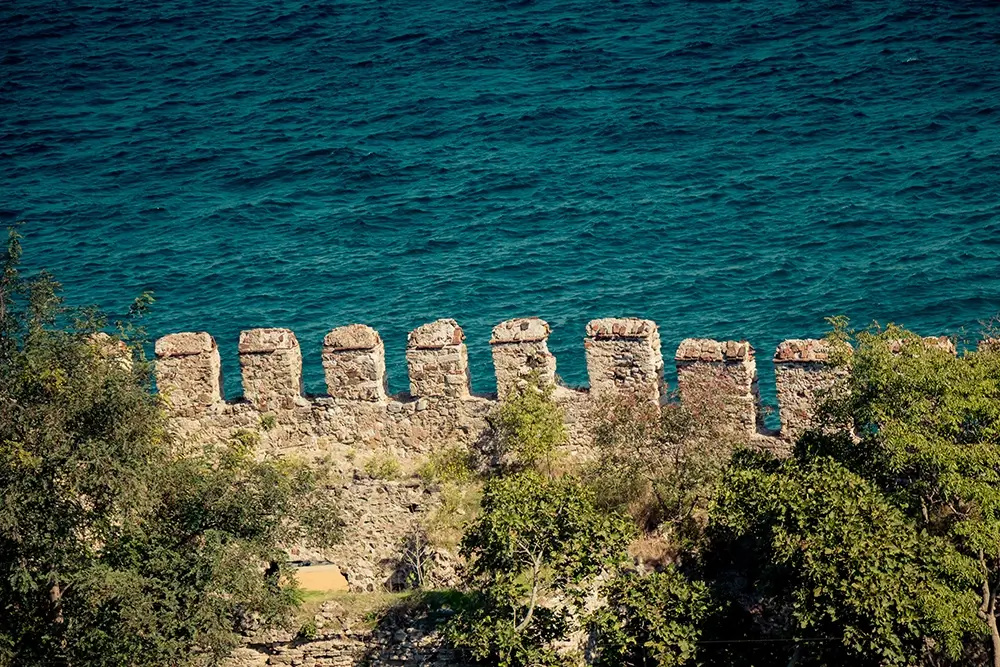
Viya surfers use their shoulders to direct their movement along the wave, sometimes relying on handplanes for extra speed and stability. Viya even has its own surf lingo, with words such as kapaklama used to describe the technique of surfing a closeout wave, or sulun for riding open-faced waves.
Nowadays, Viya surfing is practised less and less, leaving it up to Turkish surfing pioneers like Tunc Ucyildiz to continue the nation’s long-lasting connection to its surrounding bodies of water through the power of sport and activity.
Tunc’s story evokes the emotion of a never-say-die attitude, where determination and pure stoke allowed him to share his passion and inspire his home country to embrace surfing as a way of life, not just a mythical, faraway hobby that only existed on TV screens.
Originally from Istanbul, Tunc’s first taste of waves came when he used to search for seashells as an eight-year-old while on summer vacation in the Turkish Mediterranean Sea.
“I remember during the summer, when there were large waves that hit the seashore, the lifeguards used to place a red flag at the beach prohibiting entry to the water. But those waves would bring large seashells from deep close to shore, and I liked to escape from the eyes of the lifeguards and onlookers and body surf with goggles on to collect those large seashells.
“I think those early days were when I got hooked on the water. But it wasn’t until years later that I reconnected with that passion.
“When I went to college in New York, my friends took me fishing on a hot summer day. I remember getting so bored with fishing and decided to walk around the bay, which is when I saw surfers for the first time. They were only riding small waves, but it instantly brought me back to my childhood memories, and I knew right away that surfing was what I wanted to do.”
It was then and there that Tunc became hooked on stand-up surfing as we know it today, and he literally could not wait to get in the water and try it out for himself. It was a moment that sparked a previously unimaginable journey for Tunc and the future of Turkish surfing.
“I got so excited that I started looking around the beach for something to float on so I could paddle out. Weirdly enough, I found a piece of wood from an old boat wreck that still had some nails sticking out of it. I flipped it around and paddled out.
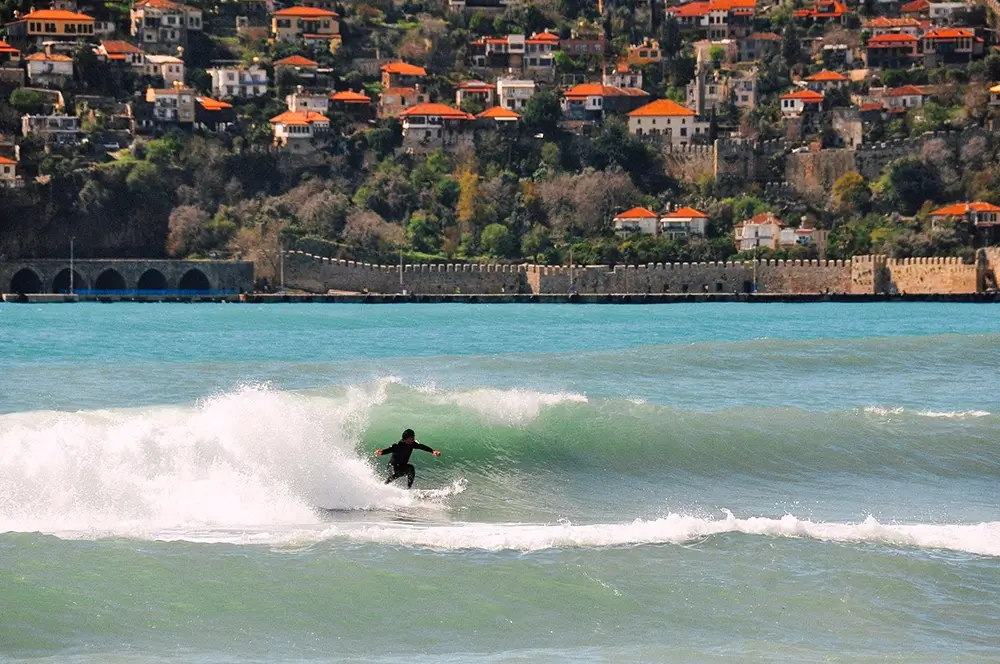
“I got some laughs from the surfers in the lineup who sarcastically complemented my cool board. The very next day, I went to a surf shop and bought my first surfboard, which would eventually lead me to become the first Turkish National Surfing Champion and founder of the official surf branch in Türkiye.”
Tunc returned to his homeland with a burning desire to share his passion for surfing with his fellow countrymen. He was pleasantly surprised to find that there was a very small number of dedicated wave catchers already practising stand-up surfing in Turkish waters who had also been inspired by overseas experiences.
Assuming responsibility for the growth of Turkish surfing, Tunc worked hard to bring organised surfing to Türkiye so that aspiring surfers could receive proper training and education about the waves and water safety.
“I contacted the sports ministry in order for them to recognise surfing as an official sport, which would then allow us to receive government support to train and support youth surfing development.
“They told us to organise a couple of events and prove that surfing was actually possible in Türkiye. So that’s exactly what we did.
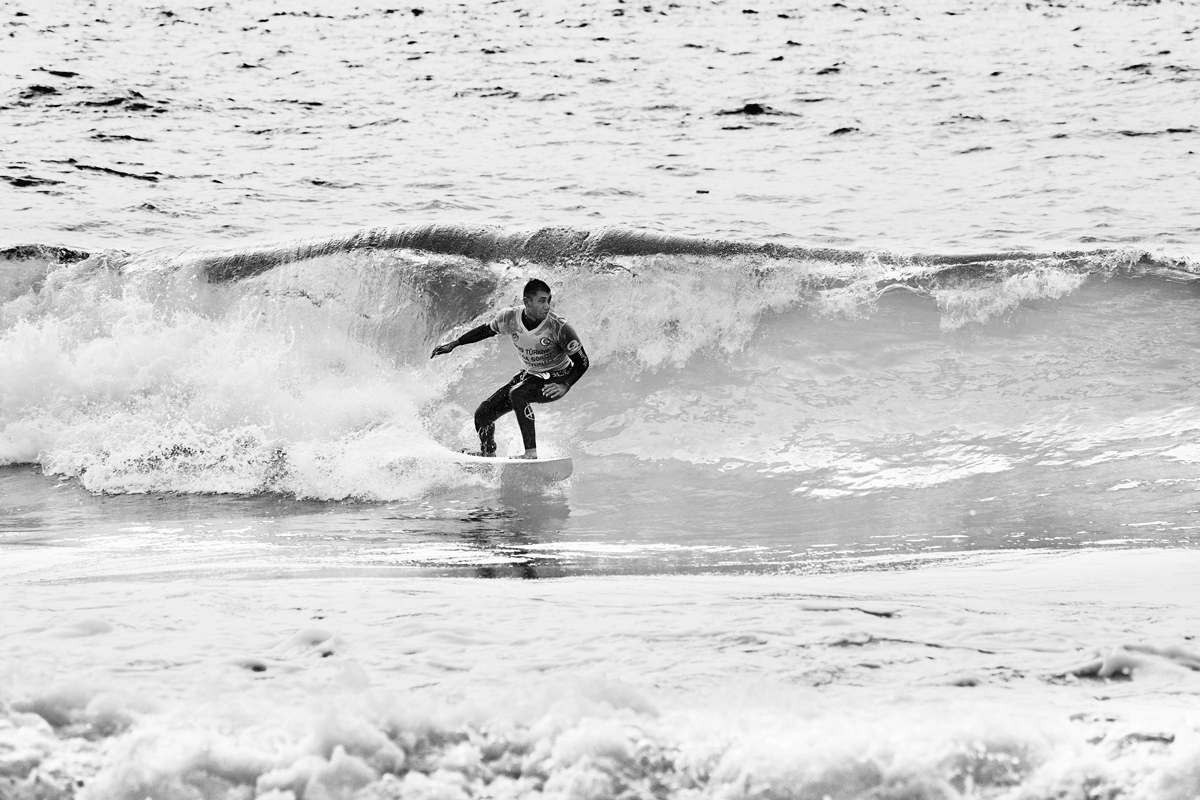
“We organised the first Turkish Championships back-to-back for three straight years, and surfing became recognised as an official sport in Türkiye.
“We then created and registered a national team with the ISA, opened numerous surf schools, and granted government-endorsed athlete scholarships. Since then, surfing has taken off in Türkiye.”
Thanks to Tunc and his like-minded compatriots, Türkiye is now home to four surf schools on its Black Sea coast and two on the Mediterranean side, with close to 100 up-and-coming surfers learning the ropes across the six schools.
“Nowadays, the Turkish surfer population is around 300. Still not huge, but we have come a long way. We just want everybody to learn the correct surf etiquette, where surfing positively touches people’s lives.
“It’s a life-changing sport and activity in my opinion. I would love to see all of the Turkish surfer kids experience the positive life-changing effects of surfing, just like it motivated me and became the driver of my life for success.”
So what are the waves actually like in Türkiye? Or should one just stick to the doner kebabs, hot-air balloon rides, and antique rug shops?
“In winter, you can get waves almost every week in the Black Sea — sometimes we even get six to seven days of non-stop waves. The Mediterranean side is less consistent but possesses much more power when the waves hit.
“During the summertime, both coasts are less consistent but still receive short-period wind swells, especially in the Black Sea. In the summertime, you can still surf every week, you just have to know where to look.”
Tunc swears that Türkiye is even more consistent than the East Coast of the USA, and uses New York surfer Balaram Stack as the perfect example when teaching kids that you don’t need world-class waves to become a world-class surfer.
“People are slowly realising that the wave consistency and quality in Türkiye are good enough to become an advanced surfer. I always use myself and Balaram Stack as two examples of how you can go from a beginner to an advanced level by surfing average waves.
“I saw firsthand how Balaram progressed by surfing the inconsistent and mushy waves of East Coast USA. He showed dedication throughout the winter and the summer, and has since become one of the world’s best surfers without travelling extensively.”
Waves are still being discovered in Türkiye, and with each swell comes new possibilities. Plus, there aren’t many surf breaks around the world where you can get tubed in front of ancient monuments.
“So far, we’ve discovered a couple of point breaks in the Black Sea and a couple in the Mediterranean. There are both left and right-hand point breaks that line up like Trestles with the right swell.
“I just discovered a new point break last week on the Mediterranean side. The two main point breaks in the Mediterranean both offer up the opportunity for barrels, airs, snaps, and cutbacks all on the one wave — you would be surprised.
“Although those point breaks don’t work often, when they work, they are world-class in my opinion. One of them is right in front of an ancient Roman Empire city, and you face the extension of the mountain, God’s Olympus. You literally look straight at the mountains when you’re in the lineup — it’s insane! For me, it rivals any experience anywhere else in the world.”
Pioneering the surf scene for an entire nation is bound to come with some unforgettable memories, and Tunc’s journey is no exception. His authentic passion for the sport has led him to experience some surreal and special interactions within his homeland.
“I’ve had so many special moments, from surfing in front of Olympus Mountain in ancient cities, with its psychedelic scenery and perfect Trestles-like point break waves, to getting out of the water on a snowy winter’s day, only to be greeted by a random village grandma who was waiting with a hot teapot and a pot full of hot water for a warm shower.
“I’ve had so many amazing experiences, but one in particular really stands out.
“My most memorable surf session in Türkiye was in 2011 at a spot near Istanbul called Rumeli Feneri. We had heard this whole village body surfs as a part of the Viya tradition that has been running for hundreds of years.
“My friend Orcun and I set out to find this spot in Rumeli Feneri. When we arrived there, it was a stormy day. We saw a guy on the hill watching the waves roll into the bay. We asked him if he knew the Viya surfers, and he said he was one of them, and they surfed in the very bay we were looking at.
“He asked us why we were there, and when we told him we were there to surf, he wanted to see how it worked with surfboards. It was probably one of the first times they had seen modern surfing.
“I went into the water while my friend watched from the cliff. I had to beat the heavy current pulling me to the opposite side of the cliffs to reach the take-off spot in this narrow bay.
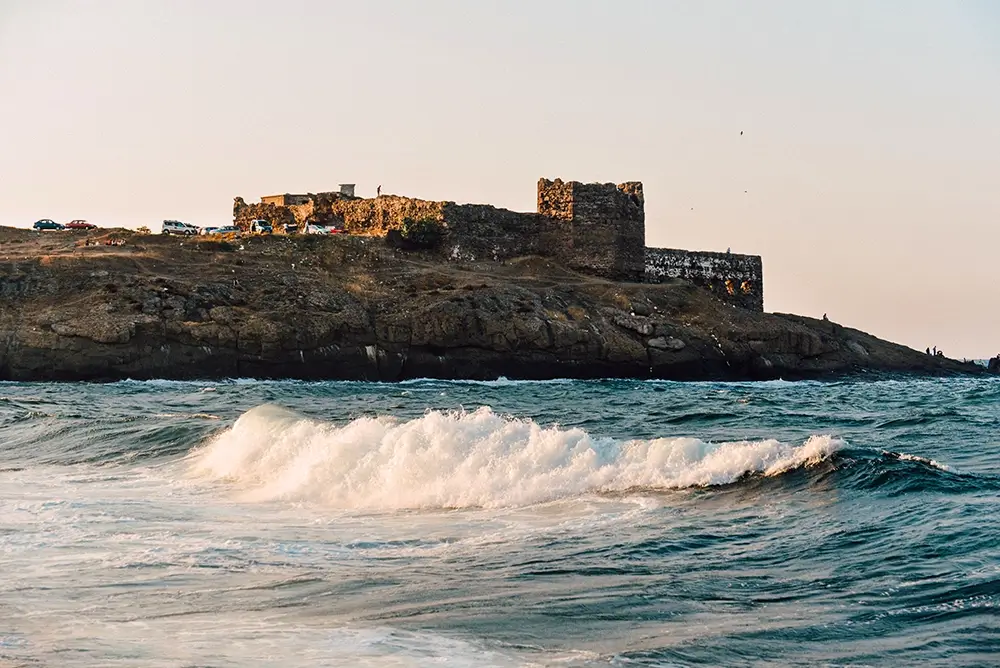
“I took off on a wave and put two turns together. While I was exiting the wave, I heard a huge crowd clapping and whistling. I lifted my head and saw the whole village was gathered on top of the cliff, watching. There were at least 50 or 60 people.
“Then all of the Viya surfers started to whistle when big sets approached, guiding me from the top of the cliff. They clapped and whistled with every wave I caught. A couple of them joined me in the session, body surfing the waves with me. My friend Orcun also joined us in the water afterwards. The feeling was amazing.
“After the surf session, we got out of the water and had a chat with the ancient body-surfing villagers, who spoke the same language as the modern surfers. They talked about the direction of swells, periods, and their own legends of who would body surf on bigger days.
“It felt like a miracle to me, and I felt like I had found my lost soulmates in my own country. We were coming from different social backgrounds within the country, but surfing bonded us within minutes like true brothers. It was an amazing feeling, and I will never forget that day.”
Even though many people are still unaware of the existence of surfing, let alone the possibility of riding waves in Türkiye, Tunc said that people are becoming more accustomed to the sport as it spreads along the nation’s coastlines — albeit slowly.
“Many people still don’t know what surfing is in Türkiye. They look at me with confused eyes when I walk around with a surfboard. Some people even ask me if my board is a type of canoe.
“When I explain to them what surfing is, they don’t believe there are enough waves in Türkiye to surf because the image the people have here of surfing is that of Nazaré or Mavericks, which they see on the news.
“I even had trouble convincing actual surfers that Türkiye had the right waves for hosting contests, but they just couldn’t believe it,” he said.
Tunc can see a bright future ahead for Turkish surfing, and something tells you it won’t be long until we see a new generation of surfers emerge from the region. Tunc said there are already signs…
“Even airlines have a designated surfboard category for luggage on their sports equipment list now, and some airports oversized luggage areas have a surfboard logo, too.
“So it is getting there — surf culture is slowly developing in Turkish coastal areas, and as the culture spreads and grows, so does the awareness among the general public. Also, the vision and level of our local surfers are growing too. Now they believe there is a real surf culture brewing in Türkiye.”