
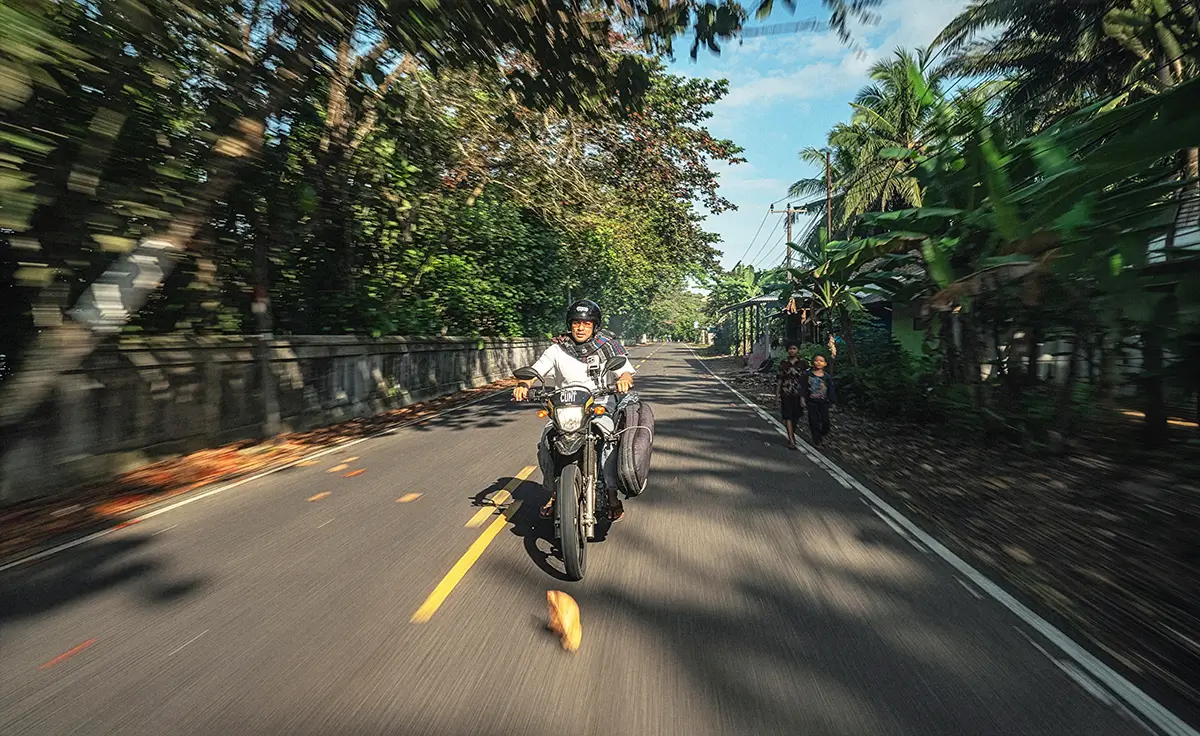
He writes about lonely breaks, locals, and the freedom of remote living — about people’s lives in the underworld, the brighter futures that come after, and the simple things that we take for granted.
Really, he writes about the roads less travelled, and the kinds of people that travel them.
Tom de Souza is one of these people himself. All tanned up with beach curls, it was surprising to hear that he was actually born in London, of all places.
“So were all my younger brothers and sisters — four of us in total. I spent the first eight years of my life there. I had Australian parents, so I didn’t really feel English. I remember going to the hairdresser with Mum and always wanting to dye my hair blonde.
“I guess I’ve always had a fascination with surfing. I don’t know where it came from… maybe our family holidays to Australia. I spoke with a really strong, quite posh English accent. I hadn’t been brought up in the culture of Australia, so I guess I didn’t really feel Australian either.
“I think surfing, in a way, helped me bridge those two things and connect with who I am. When we moved to Western Australia, it was one thing that helped me feel a lot more at home.”
Tom has spent most of his life amongst the brilliant blues and rusty oranges of Western Australia, including in Perth and right by the Margaret River. But he’s always been a wanderer, just like his parents.
“My mum grew up in Broome, and my dad in Perth. They wanted to work and travel and live in different places, but the plan was always to come back.
“My passion for adventure definitely came from Western Australia. It’s a pretty wild place. There are some really beautiful areas out there, but a lot of them are quite hard to get to, so you have to be prepared and self-sufficient.
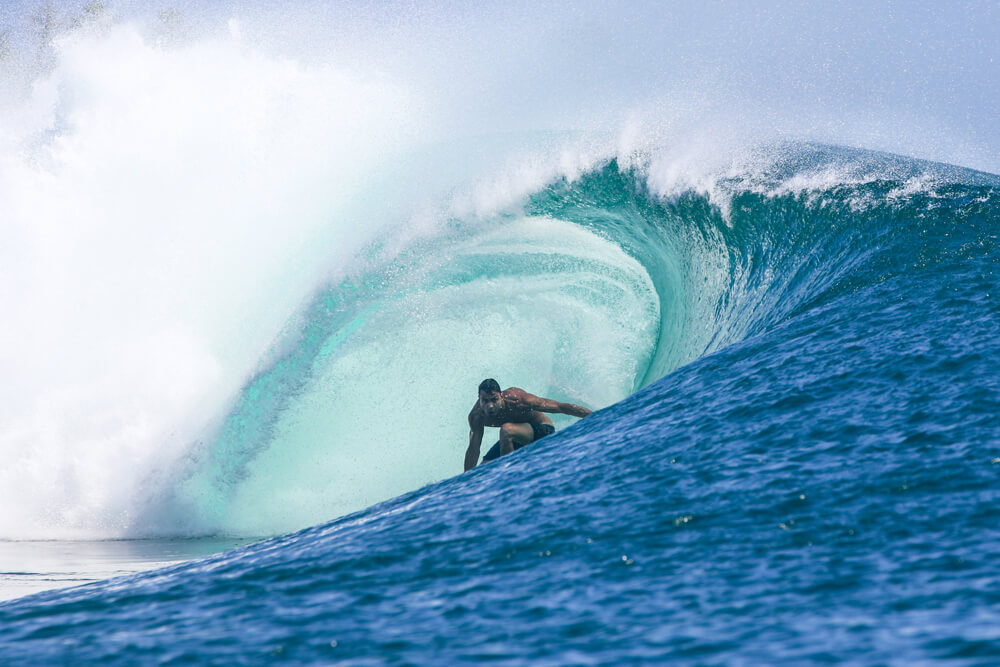
“It’s a good training ground, surf-wise. It’s often really windy, and the waves are challenging, powerful, and raw. A lot of them are perfect, but a lot of them are really quite imperfect. If you can surf in Western Australia, you can surf almost anywhere else in the world.
“During my twenties, I connected with storytelling by just going down to the coast and exploring. I’ve been all around the place.”
It was writing about his adventures out of his red Kia Sportage, loaded up with his swag, surfboards, and camera gear, that helped Tom emerge from a particularly harrowing time in his life, starting when he was just 13 years old.
It’s a journey that he’s never shied away from sharing, having described his struggles with drug abuse, juvenile detention, and mental health in some of the most raw stories you’ll ever read. It’s beautiful, honest journalism, which is probably why it’s been published and praised all over the world.
“A question I often ask is — are we born a certain way, and then do we choose a particular path based on who we are, or do we become a certain way because of the path we choose? I think, you know, it’s probably a bit of both.
“I’ve always loved reading, because it’s how you transport yourself into another world. When I was a kid and I got in trouble, the biggest punishment my mum could threaten me with was to take all my books away.
“After I went a bit off the rails as a teenager, when I started going back to school in grade 11, English was something I really enjoyed. Like most teenagers, I had no idea where I was going or what I was doing, but one of my teachers encouraged me.
“She said I was good, and that I should follow through and do something with it. My dad did too, but I didn’t think too much of it at the time. It was only after school, when I started travelling to discover myself in different places around the world, that I realised it was actually what I wanted to do.”
Travel has always been a lifeline for Tom. Beyond rescuing him from a toxic environment and redefining him completely, it also inspired his brand, ‘Stories from the Scenic Route’, and the words he’s known for today.
“As I travelled, I also met more and more people who were taking photographs. I liked it, because it was a new way to look at the world and see the beauty and detail that you wouldn’t otherwise see.
“I remember thinking about which way to go [writing or photography], because it was probably important for me to commit myself to one craft and just focus on it. I choose writing in the end, because I think the world of photography is pretty saturated these days.
“To write, all you need is a computer and a notebook.”
Unflinching in its perspective, Tom’s writing is full of extraordinary situations, beautiful landscapes, and his charming, dry sense of humour.
Mostly, his stories are about seeking understanding in the most outlandish of places while finding joy, hope, and fresh air along the way. It’s a cool little niche, and something you could say we surfers are naturally drawn to.
When asked what shaped this signature style of storytelling, Tom said it was simply travelling around, meeting people, searching for waves, and doing what he loved.
“I like going to these wild and remote places, because they give me a complete sense of freedom, calm, and peace. It’s nice to immerse yourself in the natural world and almost detach yourself for a short period.
“These places also tend to attract all kinds of interesting people with interesting stories who have found themselves out there for various reasons. It’s a natural process — if someone starts talking about something really interesting, I get it on record and write a story about it.
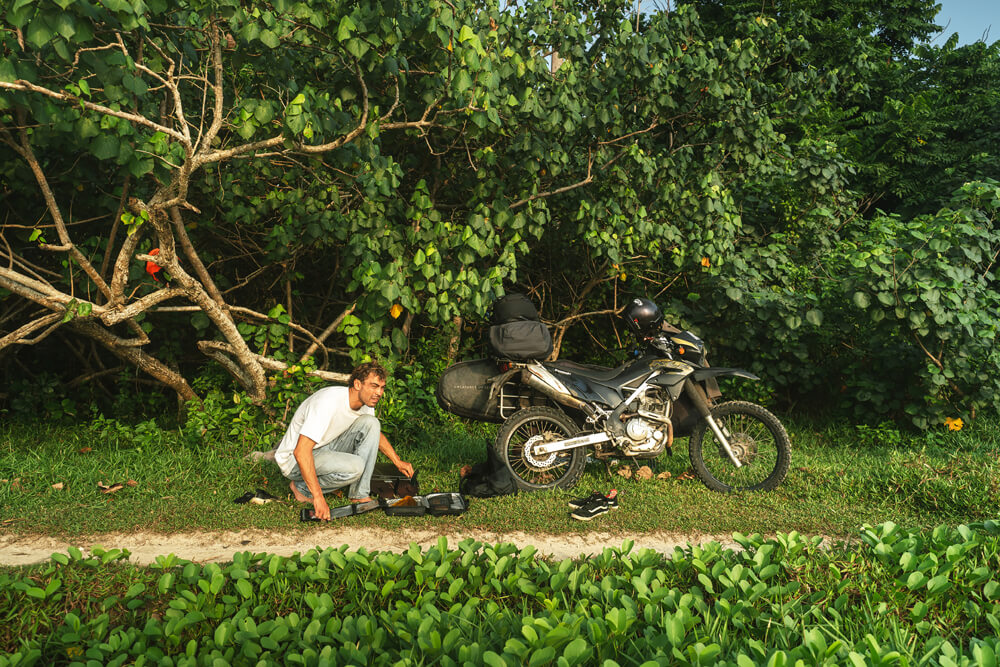
“I’ve always been a curious person, but I think writing is definitely one thing that’s fed into that a lot. It’s given me the motivation to actually go and pursue these things.”
Tom’s work as an independent storyteller has earned him three consecutive West Australian Media awards. At just 23 years old, he was even nominated as a finalist for the West Australian Journalist of the Year.
Despite receiving some pretty incredible accolades in the professional world, Tom said the most meaningful feedback has always come from those who’ve gained inspiration from his own personal story.
“My ultimate goal is to make people feel something. If somebody cries or laughs as a result of my writing, then I’ve done my job. I think that kind of deep emotion really resonates with us all. That’s the beauty and art of storytelling, and it’s something that artificial intelligence will never be able to replace.
“It’s also about what people relate to. I mean, if you look at sci-fi stories, they’re all very out there, but they’re captivating because they have elements that we can all relate to as humans.
“I’ve been going around speaking at schools, and I definitely think some of the best feedback I’ve gotten is from just talking with people who are going through the really turbulent period of adolescence and navigating their way from being a kid to an adult.”
You’ll find that a lot of Tom’s stories are entwined with the mountainous roads, welcoming people, and empty breaks of Indonesia — a place that clearly means a lot to him.
Over the years, he’s visited quite a few of the 17,000 islands dotted across the archipelago. Today, he not only speaks their language, but also understands some of the subtle differences in their cultures, food, and belief systems.
“When I started travelling, it was sort of right on Australia’s doorstep. I spent time here as a kid, but I think over the years that’s kind of grown into something else. There’s something here that I really love and connect with. I think it has a pretty relaxed pace of life, and the people here try not to let too much worry them.
“It’s always been a place that I’ve kept coming back to. My connection only developed more in 2018, when I interned as a foreign correspondent with BBC Indonesia in Jakarta. That’s when I got a good grasp on the language and started to uncover some of the millions and millions of rich human stories that are out there.
“It’s such a diverse country. It’s a place of so many islands, but I guess each one has evolved quite distinctly from the other. It’s almost like going to a different country every time, but they’re united under one banner. It’s really incredible.”
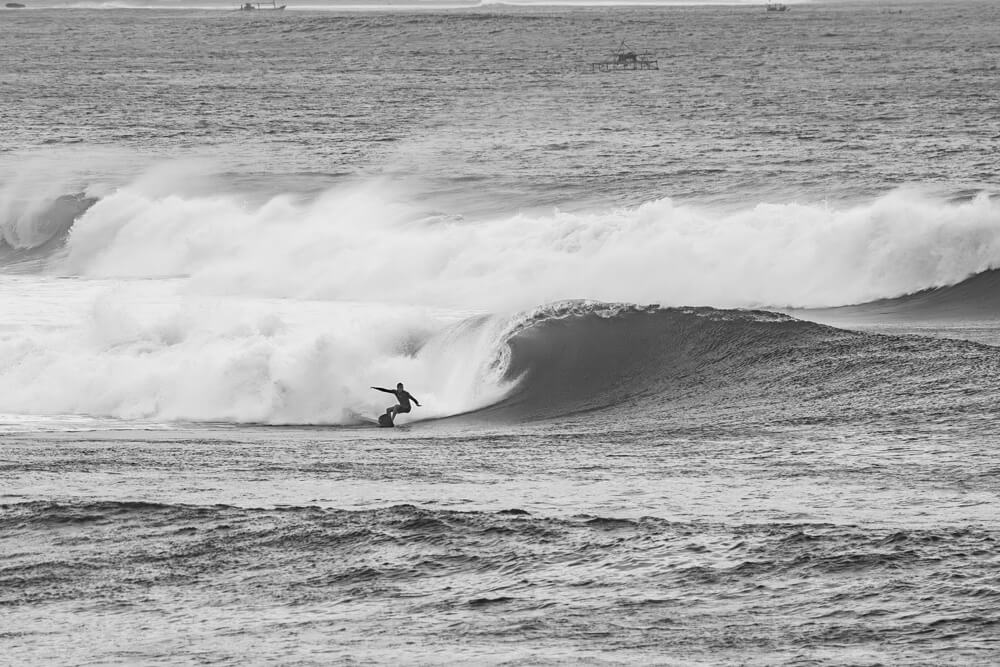
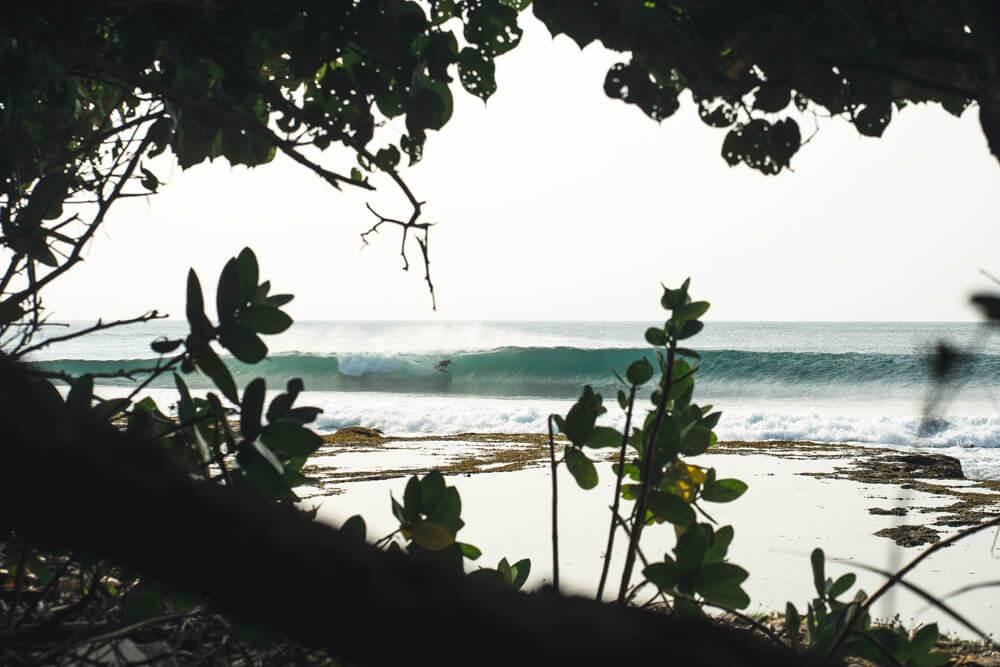
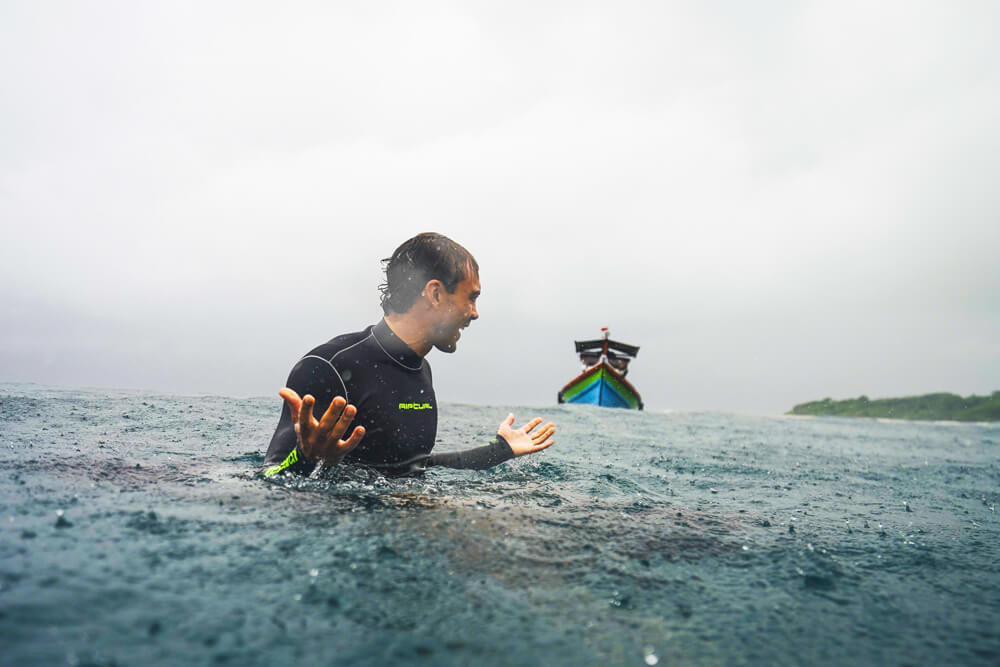
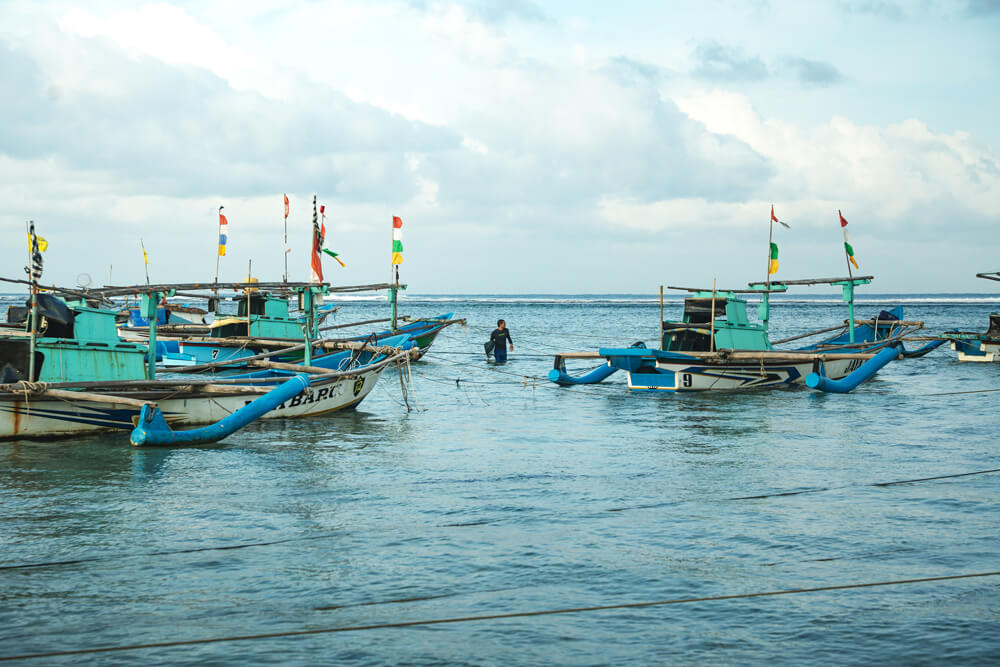
Tom spends days upon days seeking out surfable waves on the remote beaches of Indo, often with the help of charitable locals who don’t mind helping him along, inviting him inside for a meal, or sharing their paradise with him.
Of course, some swells are more terrifying than others. He even told us of a time when a group of men sacrificed a goat and two chickens on the beach to commemorate the life of a local fisherman who drowned where he was surfing just two years earlier.
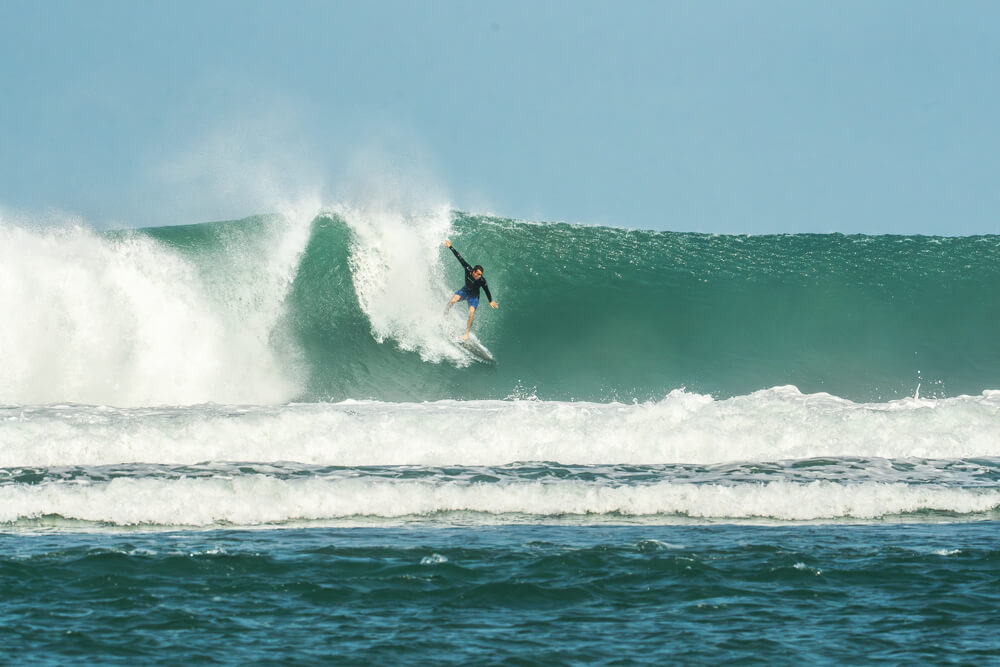
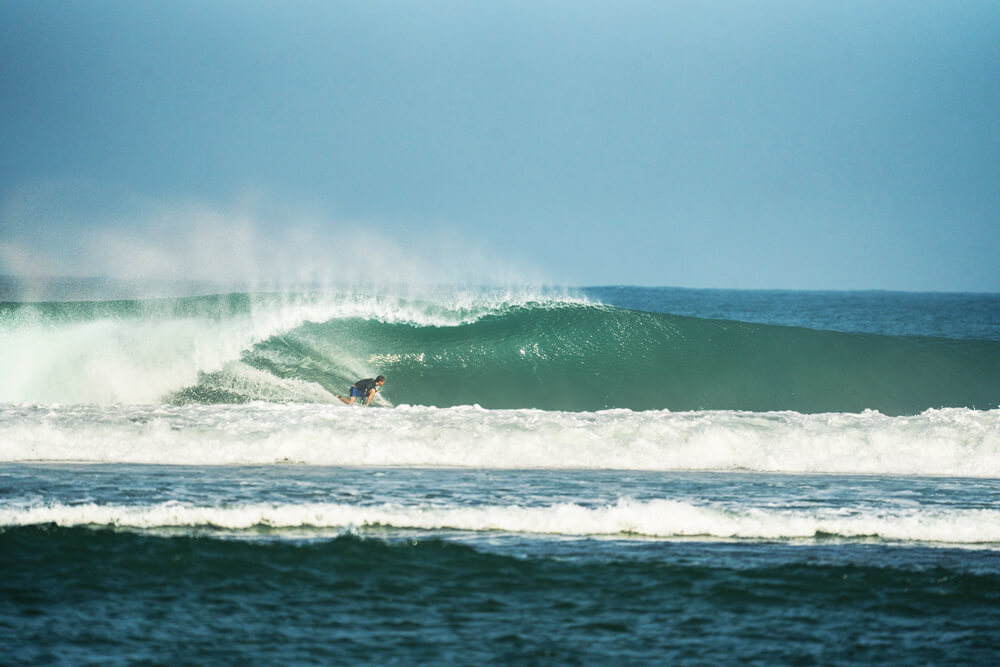
Sometimes, Tom only catches a wave or two for all his efforts, but he was quick to remind us that, while surfing is the motivation, it’s certainly not the reason.
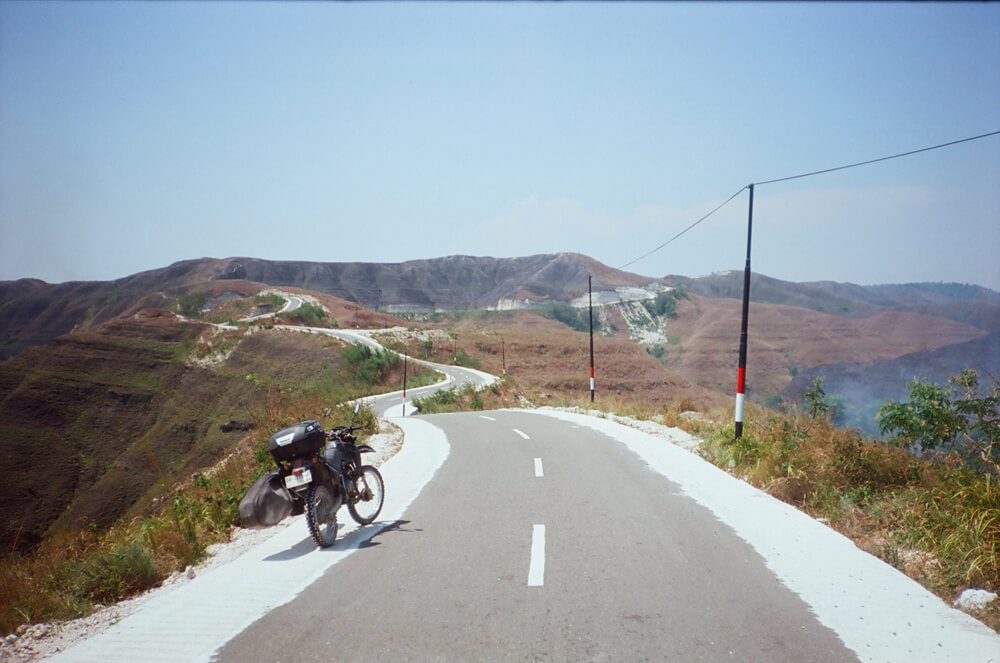
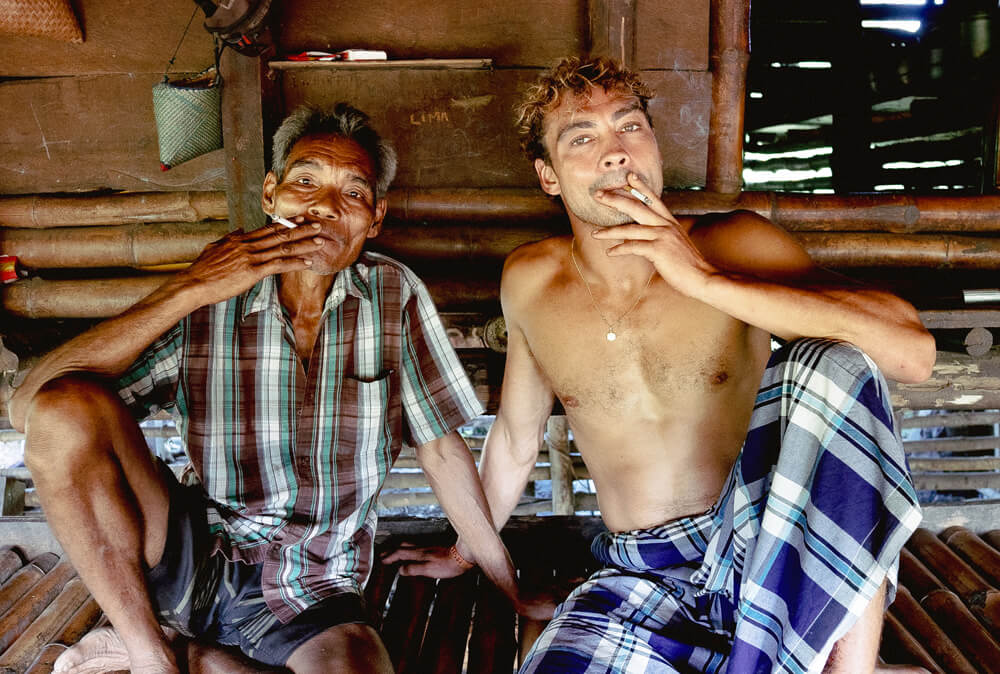
“I think the thing with Indonesia is the waves are either really crowded or really rogue and fickle, so you have to pick one. It’s either a big-name break where you have to battle it out with 100 people or somewhere that’s off the map a bit.
“You have to really want the waves and get used to roughing it out, being uncomfortable, sleeping on the floor, and eating not much else but rice. The beautiful part, for me, is actually going to these places, not just because of the surfing and the waves, but because of the deeper connection you get with Indo and its people.
“If I went just looking for a surf, I’d be pretty disappointed. The things that have stayed with me are the relationships I’ve made along the way and the experiences I’ve been able to share with others.”
It was in Indonesia that Tom just so happened to bump into legendary surfer, shaper, and explorer Jim Banks. Hailing from Cronulla, he also followed his whims to seek out perfect waves in remote locations, which is why he’s called Bali home for the last decade or so.
Being an innovative, experienced shaper with all kinds of waves at his fingertips, it’s thanks to him that Tom’s quiver is looking pretty darn healthy.
“I’ve been working with him on some boards. I’ve got kind of everything from a 7’2 down to like a 5’10 — around seven boards. There are not too many waves out here that you need a really big board for.
“I never liked twin fins at all. I found they lacked a lot of hold and drive. Push them hard, and they just kind of slide out a bit. But then Jim got me to try one, and he’s completely transformed my opinion of them. His didn’t even feel like a twin fin. It has all the speed and glide with the hold and drive as well.
“In the early days travelling around Indonesia, it was good to keep it as minimalist as possible. So when I first set out, I kind of just asked him if he could make me one board I could surf in anything, maybe a 6’2 or something.
“He said a 6’5 — that’s the magic number. It can do anything from triple overhead to waist-high.”
Curiously, Jim also encouraged a project of Tom’s that we’re very much looking forward to — The Long Road Home.
Weaving together all of his experiences over the years, it’s an upcoming feature documentary following his wild motorcycle adventures across Indo and all the things he learnt en route about love, faith, friendship, life, family, and death.
From the glimpses he’s shared on social media, it looks absolutely insane in the very best way. Tom said it was an editor at the BBC, Rebecca, who put the idea into his head.
“I thought travelling across Indonesia by motorbike would be a pretty cool thing to do. I mentioned it to her one day, and she said people would love it, especially if I filmed it. Ever since then, it kind of simmered away in the back of my mind.
“A lot of stuff in my life changed in 2022, but that was also the year I went to Indo for five weeks on a surfing holiday. There, by chance, I met Jim. I was talking with him in the spa when he said there are a lot of good, uncharted waves out there if I really wanted them. He suggested the way to do it would be to buy a trail bike and ride east across the archipelago.
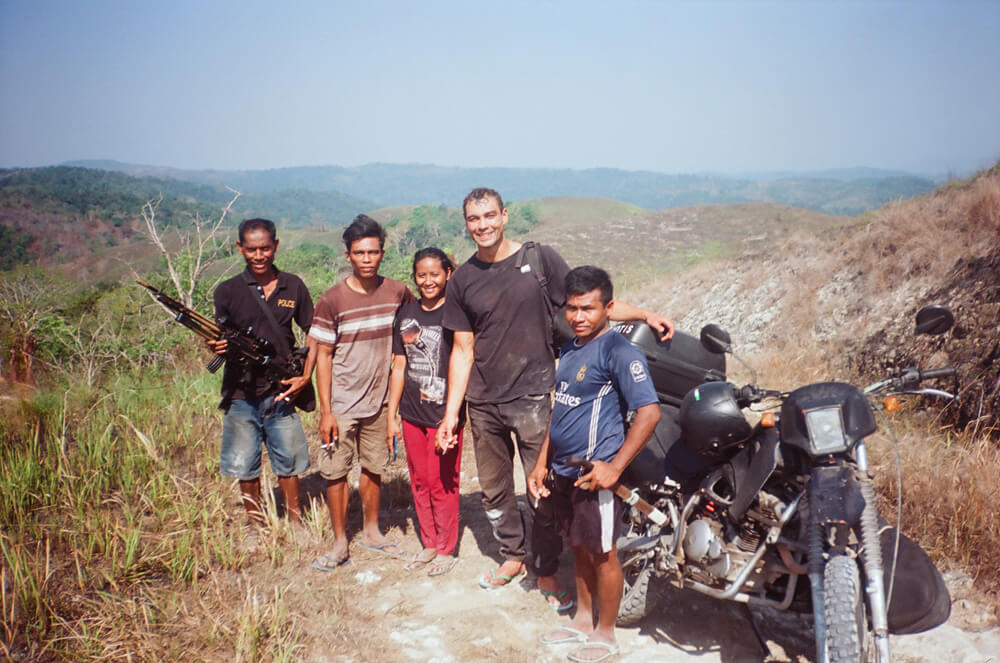
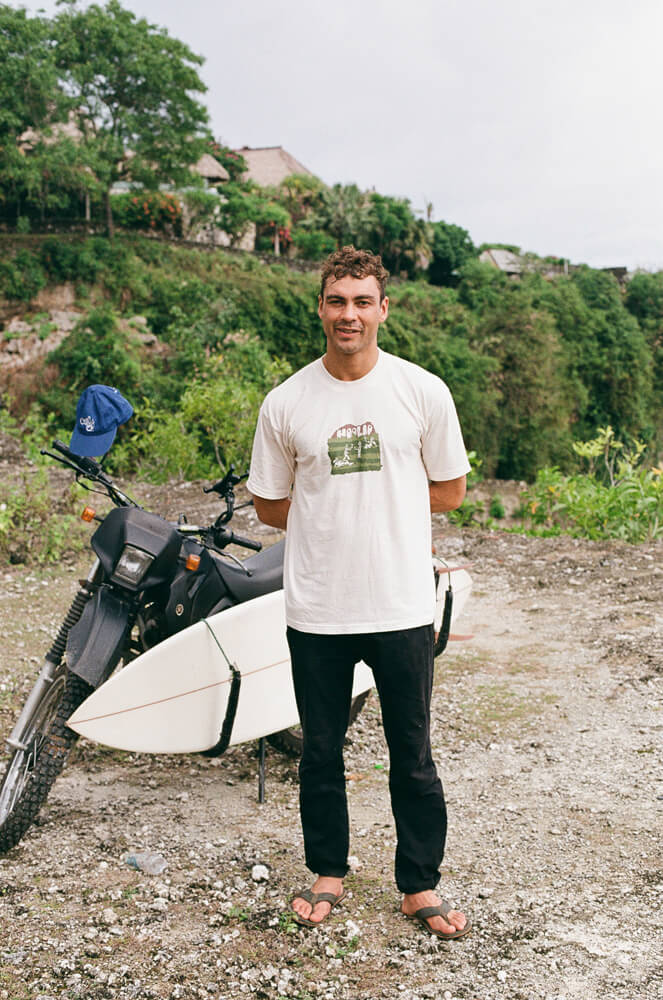
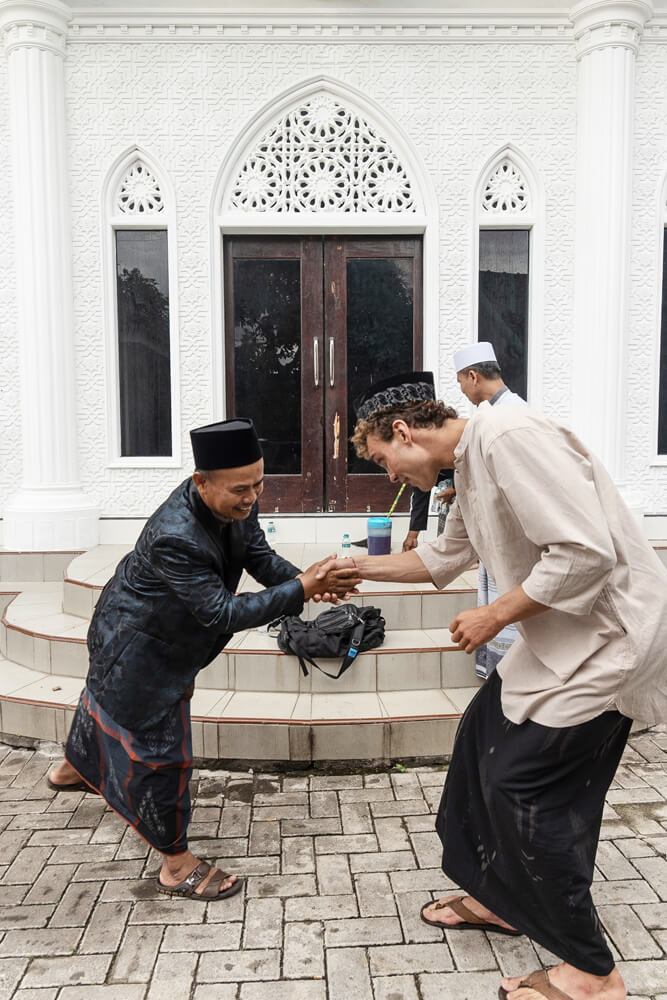
“I came back and did it the next year. I wanted to film more, so I set off with that intention. Despite a trip like that being almost a full-time job in itself, I also wrote a 10-part series for a surfing magazine along the way.
“I guess the documentary really sprouted from that trip. It was kind of the culmination of a personal journey as well. I came to Indonesia on a surfing adventure looking to discover empty waves and untold stories, but it really transformed into something else.
“Instead, I discovered a much deeper understanding of life and death and faith and humanity. Eventually, that gave me the courage to return back home to Australia — to my own family, to a place that had frightened me for a long time. I think the lessons that I learned along the way gave me the courage to almost return back to myself, in a way.”
After receiving funding from Screen Australia, Tom was stoked to say that he’s hoping to get the documentary together this year.
It’s certainly a massive job — not only squishing years’ worth of personal experiences into a measly 90 minutes, but also paying tribute to the mystic pull of Indonesia’s landscapes and culture, not to mention the locals who welcomed him into their lives. But if anyone could nail such raw storytelling, it’s him.
After 15 years of exploring the archipelago, Tom said it still never ceases to amaze him.
“There’s a Javanese word that’s super hard to translate in English — rejeki. It kind of encapsulates a lot of things, but basically it’s what we receive in our daily lives that is ordained by God, in a way. It can be anything from food to money — like your fortune for the day. It’s really quite a deep and sentimental word.
“I find it interesting how, across different languages, there are some phrases that you almost have no translation for. It’s so unique to one particular kind of people, and I think that happens because language is a window into the soul of these people.
“It’s their way of expressing the world around them, so I think in order to be fluent, it’s really important to learn and understand that world first. You know — why they view and describe things the way they do.
“Language is key to understanding, but understanding is also key to the language. They work together.”
As someone drawn to telling the stories of people living out on the fringes of society, Tom believes that all the kindest, most compassionate, and empathetic people he’s ever met have been the ones who’ve gone without. And even after just barely meeting him ourselves, we couldn’t help but agree.


