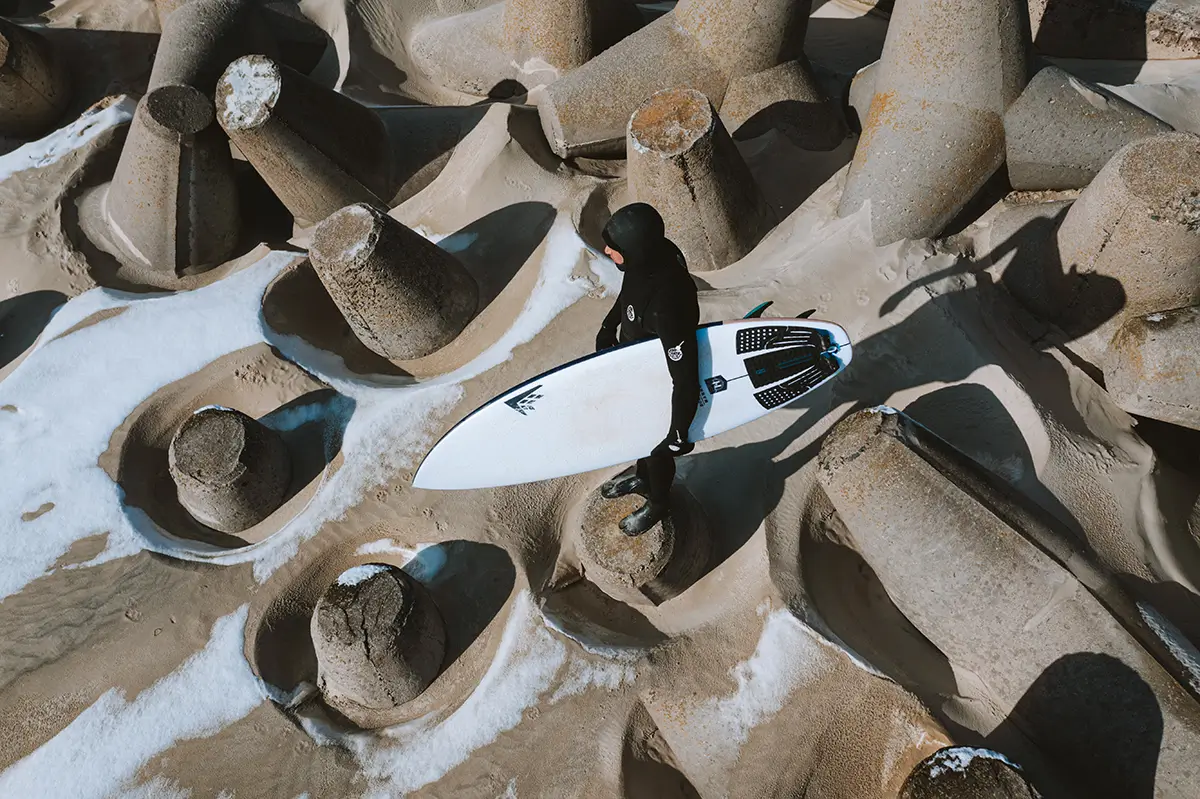
In the first edition of World Waves, we travel to the Baltic nation of Lithuania, where we chat with one of the nation’s first surfing pioneers, Averjanas Asočakovas, and how surfing changed his life.
Life is full of surprises, and the quality of waves in the Baltic nation of Lithuania is definitely one of them.
Lithuania is renowned for its stunning natural landscapes, rich history as a former Baltic powerhouse, unique cultural heritage, and having one of the oldest languages in the world.
Bordered by Latvia to the north, Belarus to the east, and Kaliningrad (Russia) to the south, surfing certainly doesn’t form part of the travel itinerary when planning an expedition to the Eastern European nation.
And although basketball may be considered the country’s second religion (or first, depending on who you talk to), surfing is starting to make waves (pun intended) among Lithuanians searching for a deeper connection to nature.
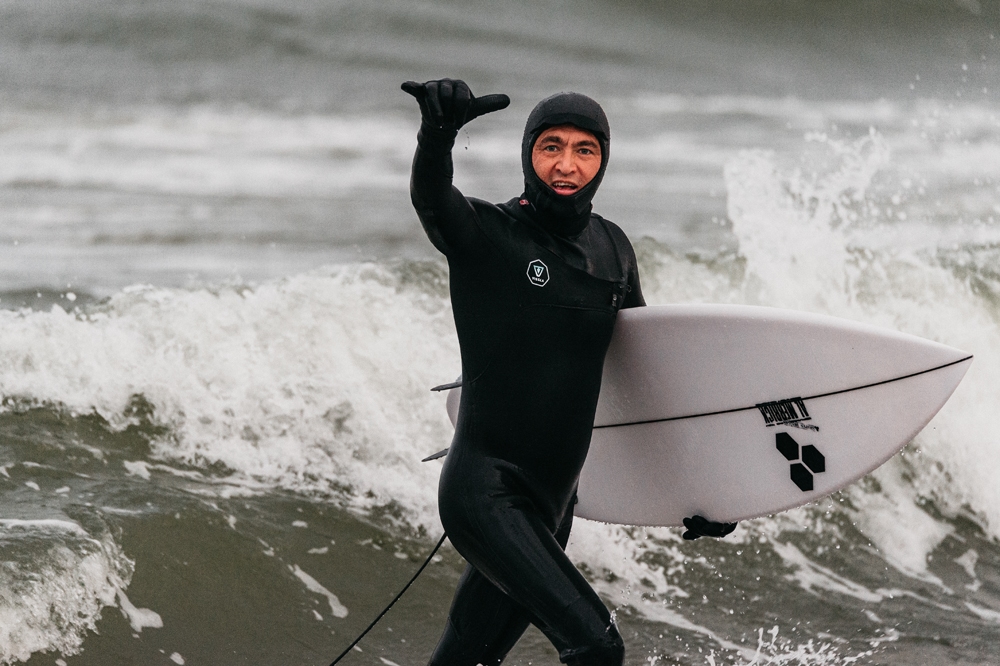
We know it’s pretty hard to imagine, especially considering Lithuania’s closest body of water is the Baltic Sea — not as well-renowned for waves as, say, the Pacific Ocean, or any ocean for that matter. But don’t take our word for it, take Averjanas Asočakovas’, an ex-Lithuanian DJ/nightclub manager-come-surfer who surfs up to 15 days a month on average!
The passionate post-Soviet state rider’s surfing journey began in the most unlikely of destinations — the northeastern city of Panevėžys, 180 kilometres from the nearest ripple of the Baltic Sea.
“I worked in nightclubs as a DJ and later as an event organiser, nightclub manager, and music producer. My professional work, which involved nightclub openings, brought me to the western coast of Lithuania, close to the Baltic Sea.
“Through parties and social events, I met people who were actively searching for extreme experiences and dedicating themselves to adventurous activities.”
It was kitesurfing that gave Averjanas his first introduction to water sports. From there, he gradually expanded his repertoire in the ocean, eventually becoming a passionate SUP boarder.
“The natural environment of our region is ideal for stand-up paddling — within a radius of 100 kilometres, we have the largest lakes in Lithuania, gravel quarries, winding rivers, the Curonian Lagoon, and the Baltic Sea.”
It wasn’t long before Averjanas’ new hobby became his full-time job, opening Vandens SUP’ynes, Lithuania’s first SUP school. With his DJing days now a distant memory, he spent every living moment in and around the water, teaching, practising, and exploring with his SUP board.
“The more time I spent on the water, the more I began to understand that it was also possible to catch waves in our country. One day, I saw the first surfer in the Baltic Sea pass me on a wave, and that moment gave me the final confirmation that surfing was possible in Lithuania.”
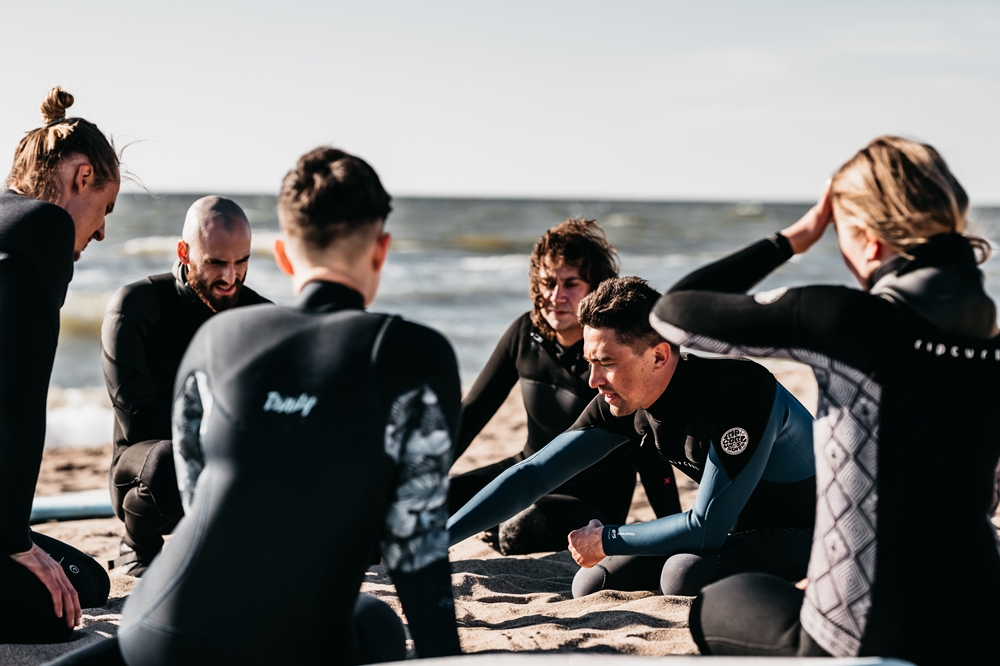
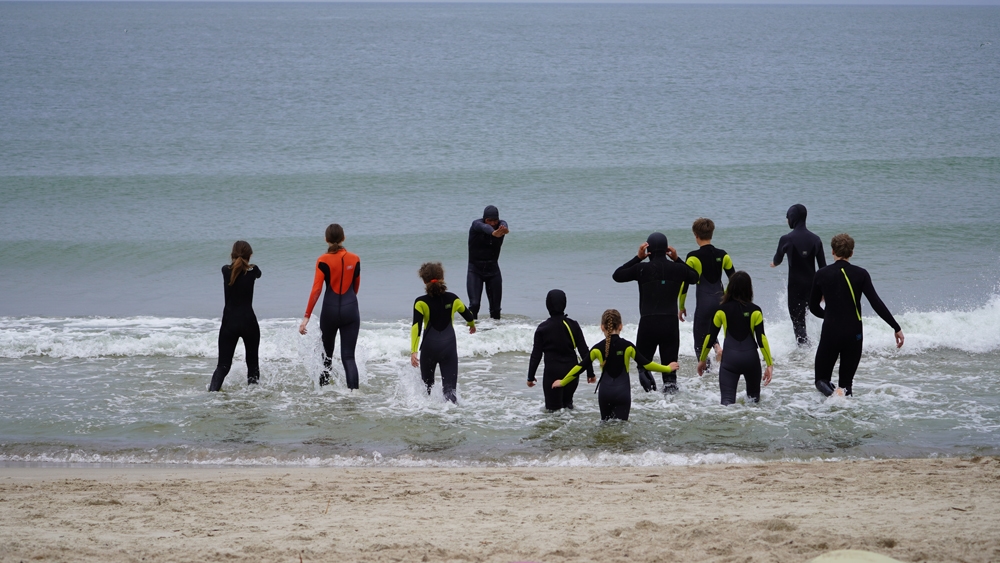
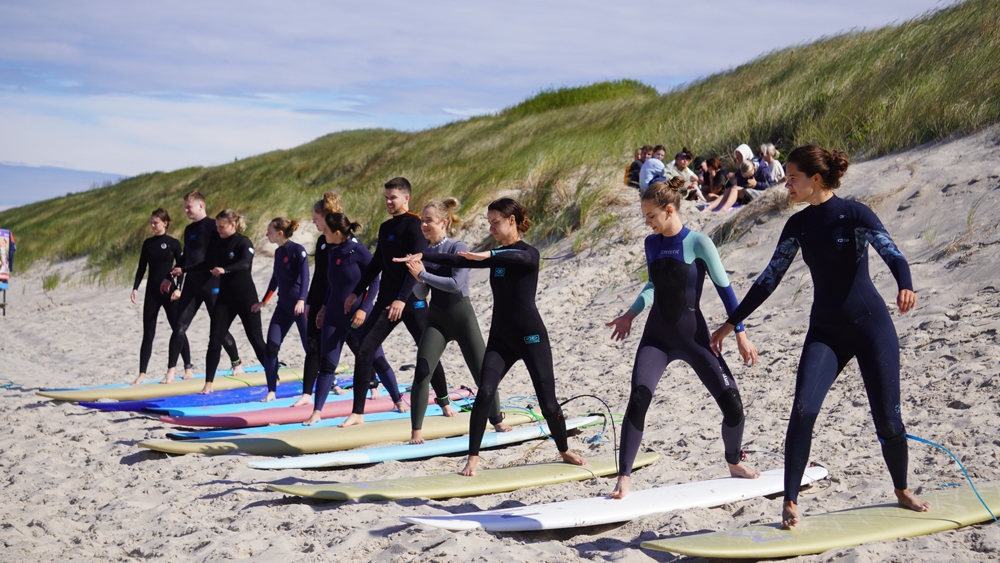
According to Averjanas, the popularity of surfing has grown significantly since he first started, to the point where he now finds it difficult to recognise every Lithuanian surfer in the lineup. There are now five surfing schools along the Baltic coast, with approximately 1,000 beginners waxing up for the very first time each summer season.
“The community is divided into clubs and groups of friends, and we already have a local championship, children’s camps, and lessons for adults.
“For such a small country, I believe this is already a considerable achievement. There are days when you can count up to 70 surfers in the water at one time.”
Don’t worry, you’re not the only one who doesn’t know that surfing is possible in Lithuania.
“Every year, more people learn that waves exist here and that surfing is possible, and many of them want to try it themselves. We receive increasing attention from local newspapers and television, which helps to raise awareness.”
So, what are the conditions actually like over there?
“The best waves are found in Klaipėda near the northern pier at the entrance to the port. With a south or south-western wind, we receive good-quality waves. The pier blocks the wind, and water is pushed from the shipping channel into a relatively shallow bay.
“When western winds blow, the waves are usually more chaotic, but even then, it’s sometimes possible to surf. In recent years, we’ve also discovered wind directions from the northeast that can produce surprisingly good conditions.”
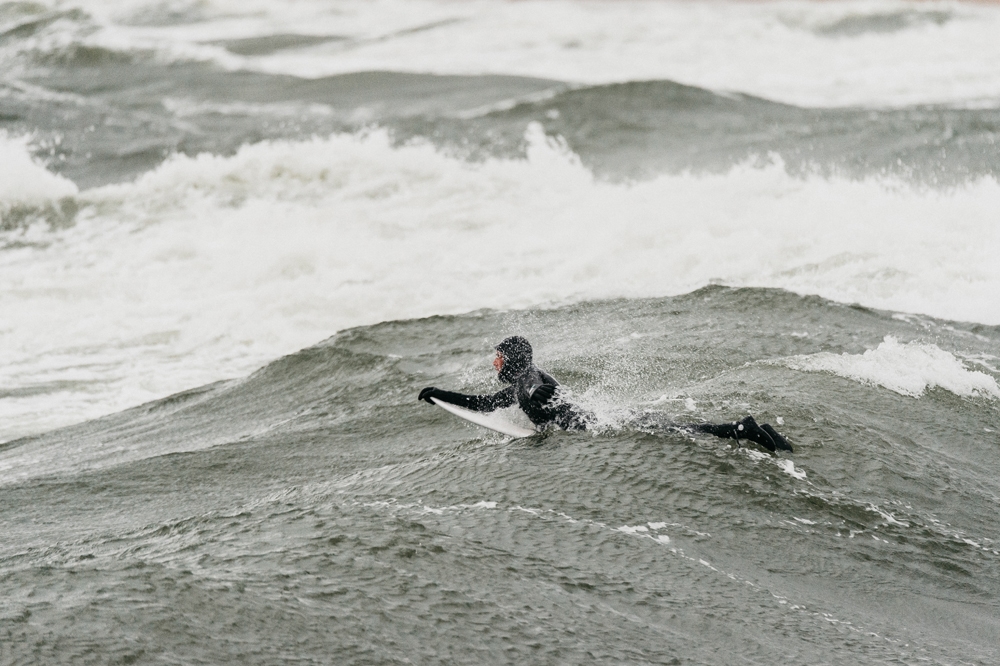
Remember that Lithuania’s waves are formed in the Baltic Sea from wind, meaning the wave period rarely gets over six seconds, but according to Averjanas, when the wind drops, you can get up to four turns in on one wave.
“From 2025 until now, I’ve been collecting data on how many potentially surfable days we have per month. On average, the number is between 10 and 15 days.”
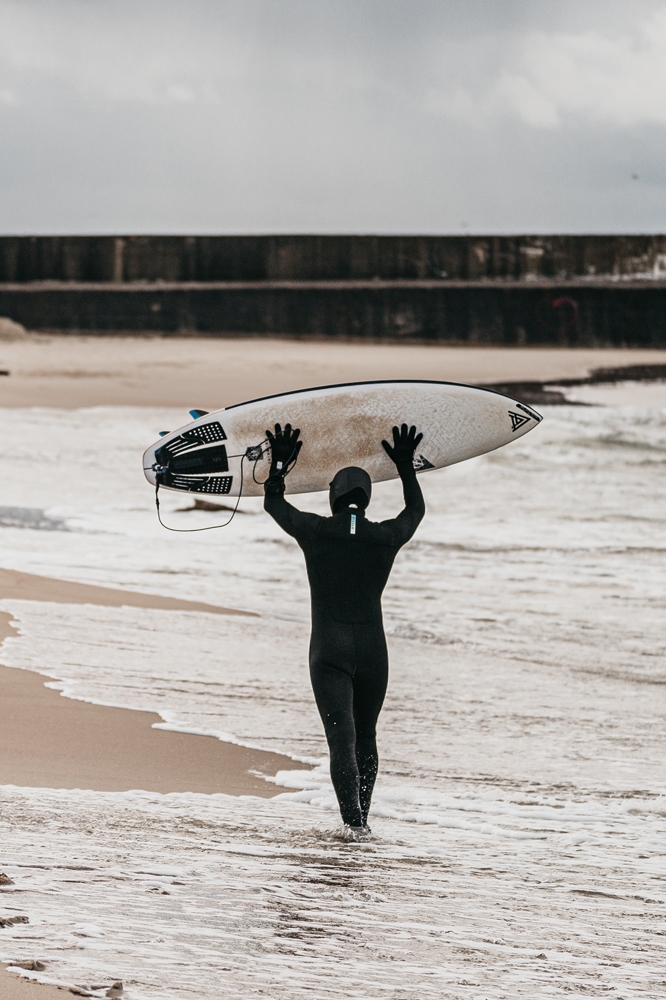
Averjanas has surfed all over Europe, spending a fair chunk of his time in Portugal and France, where he organises surf camps with Vandens SUP’ynes. However, his most memorable surf session came from an unforgettable winter’s day at home in freezing conditions.
For the first two hours, I surfed with a shortboard, and then I noticed the wind was calming down and the waves were becoming thicker, more powerful, larger, and at the same time, slower.
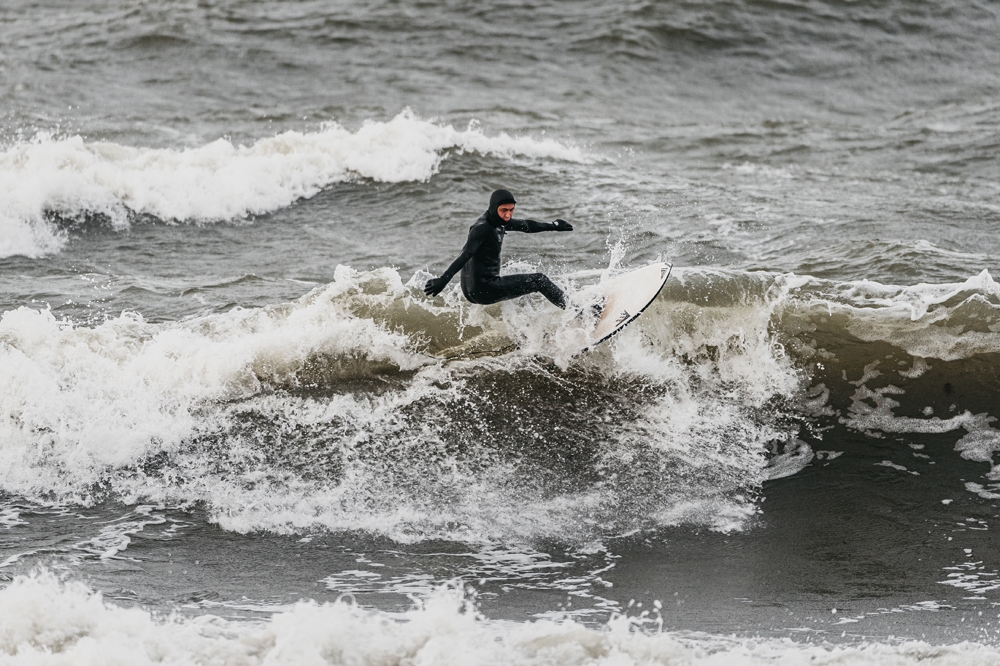
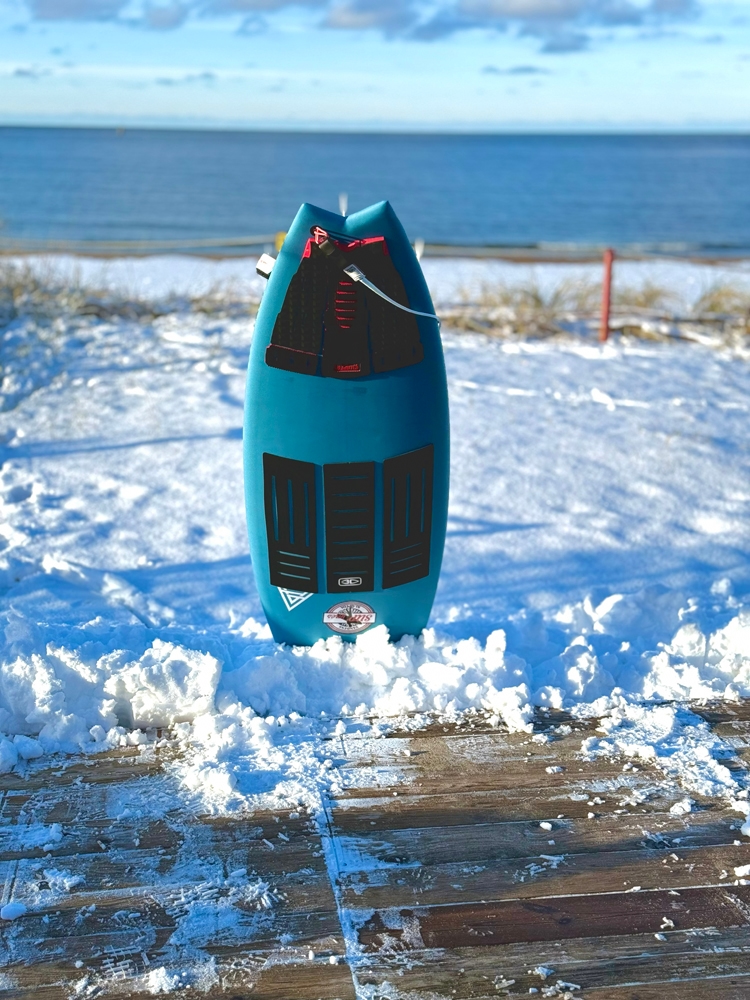
“I decided to change my boots and gloves, switch boards, and grab my new twin-fin board from the shelf before paddling straight back out.
“I ended up catching five of the best and longest waves that I still remember very clearly to this day. The most enjoyable part was that my colleague filmed my session from the shore with a phone, capturing my rides. It was an unbelievably good feeling, and it’s still a pleasure to watch that video.”
For the record, we went and checked out the video on Averjanas’ YouTube, and the guy is not exaggerating — anyone would be stoked with the size and length of those waves anywhere in the world.
While many surfers from unusual surf destinations around the world dream of surf trips to Hawaii, Indonesia, and Australia, Averjanas is planning a road trip around the Baltic, where he thinks there are still many undiscovered waves.
“I truly believe that there are still undiscovered spots in Lithuania. It’s necessary to test the entire coastline under different conditions. Since most of our waves are beach breaks and the bottom is sandy in many places, changing conditions can definitely reveal new locations.
“One of my long-term dreams and travel plans is to drive around the entire Baltic Sea coastline from all sides. I’ve already surfed in Poland and Latvia, and I know there are waves in Estonia, Sweden, and other places around the Baltic Sea.”
So there you have it — surfing is possible in Lithuania, and you can actually score regularly enough to warrant a planned surf trip. The jury is still out on whether or not it’s the 0-degree water or the lack of awareness that Lithuania still hasn’t blown up as a surf destination and become the new Bali. But at least you know you could potentially be the first to surf in some locations.
One thing’s for sure though — friendly locals like Averjanas can’t wait to welcome you to their beautiful country and go surfing.
“Through wave sports, we introduce Lithuania to the world, and at the same time, we introduce the world to Lithuania. People are always surprised to learn that surfing is possible here, and that’s why we actively create content on social media, so that others can see our exotic environment.
“We truly do have waves here, and many of them are very enjoyable to ride.”