It’s rugged, remote, and often unmarked, with lots of deadfall (think clumps of trees strewn everywhere due to regular avalanches), requiring advanced route-finding and backcountry skills.
It’s considered one of North America’s most lonely and strenuous long-distance trails due to unpredictable weather, wildlife (bears, cougars, wolves, moose) and river crossings. Sounds like a hell of a cool holiday, hey? I found it was more than I bargained for, and then some.
‘Adventure of a lifetime’ is too often bandied about with experiences like this. For me, it wasn’t so much answering the call of adventure, but that of my son’s request.
My son Sam had signalled his intent to undertake this monumental hike more than a year ago. In doing so, he also expressed how much he wanted to share an experience like this with me. So, it was a given that I was going, no questions asked.
Having undertaken some short hikes with him the previous year in Canada, I had some trepidation about the elevation, but I was undeterred by the physicality of it.
As funny as it sounds, despite skydiving several times, bungee jumping, and partaking in various other adrenaline-fuelled things without a care, scrambling along narrow, rocky ridgelines with steep drop-offs certainly got my heart pumping, and not in a good way.
Nonetheless, I was determined to go and started preparing for the trek months in advance. I like to be prepared. Work commitments aside, I was managing to clock up around 35 to 40km a week, which I thought was okay. Admittedly, all this walking and hiking was eating into my surf time, but I was determined not to hold up Sam, who happens to travel at the speed of light. I think he might have been a mountain goat in a prior life.
Unfortunately, given the topography of the Sunshine Coast, I wasn’t getting in too much elevation.
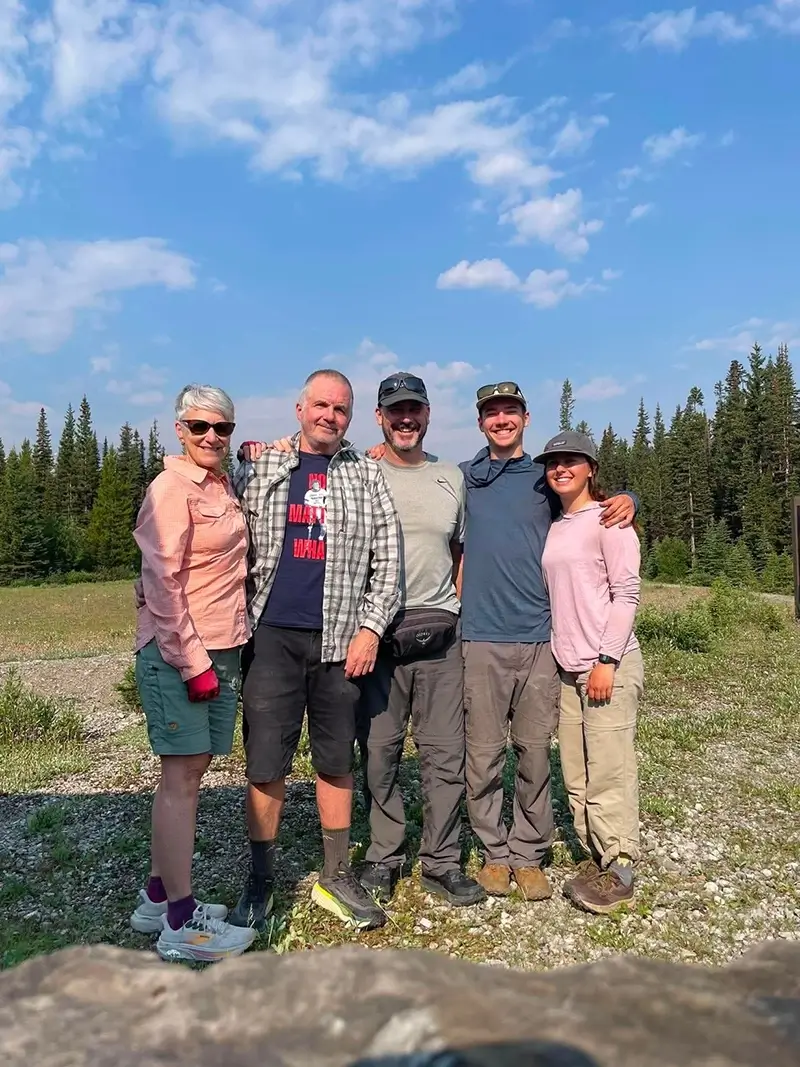
Fast-forward a couple of months, and I was feeling quite confident. I was getting my k’s in and had gradually accumulated the gear I needed. I tell you what, this super-lightweight hiking gig is not a cheap endeavour.
Fifty days out from the hike, while renovating what’s soon to be our new Smorgasboarder HQ, I rolled my ankle. The result was a grade-two tear of the anterior talofibular ligament.
Bloody hell, Sam will kill me, I thought.
A visit to the physio and I was assured I would be right for the hike. I just needed to rest up for a few weeks.
Cutting it fine, I thought. I need to keep up my k’s.
A few weeks on, I tested it with a 14km hike around Cradle Mountain and a steep 3.4km ascent up Mt Wellington in Tasmania.
Should be right for the GDT, I thought, despite my ankle being as fat as a whale.
Then, three days out from my departure for Canada, disaster really struck. Because of the swelling in my ankle, I hadn’t been able to fully stretch my calves, quads, and hamstrings, but noticed more freedom of movement on Sunday, so I undertook some rigorous stretching.
As I found out the next morning, in true Dave Swan fashion, I had overdone it and somehow managed to tear my pelvis — specifically my anterior sacroiliac ligament — rendering me unable to move.
The following morning, I was no better and resigned myself to the fact that I would be unable to join Sam on the hike. I couldn’t believe I had come this far to let him down now. We would not get to share such an incredible father-son bonding experience.
Later that day, I once again picked up my book Never Finished by David Goggins and started reading before reflecting on my situation.
This was a once-in-a-lifetime opportunity that may not present itself again. How many other times would I get to hike the Canadian Rockies with my son? It was time to pour myself a giant mugachino of harden-the-f*ck-up and get my mind back in the game.
I was going, no matter what.
As I boarded the plane, let’s just say my family was far from convinced by my ‘good to go’ quip. My workmates shared the same lack of confidence in my mobility. The 16+ hours on the plane certainly didn’t help, but there was no turning back now.
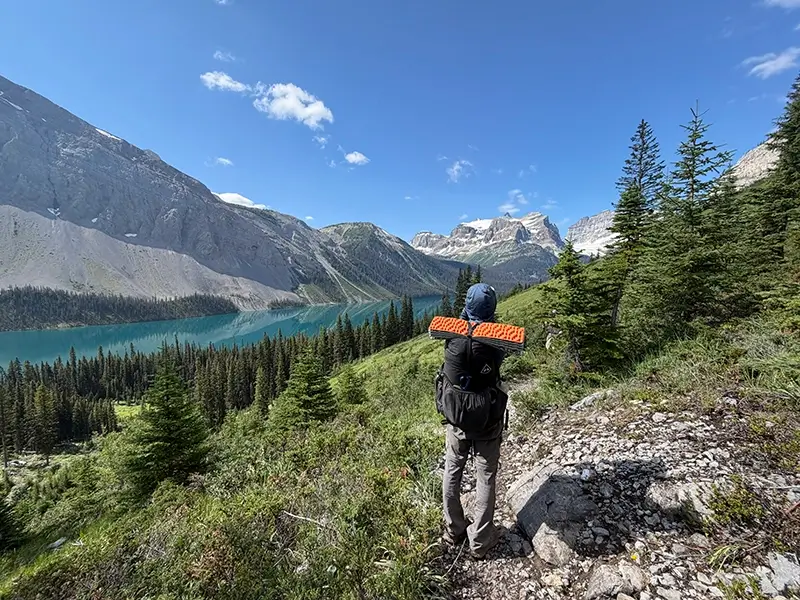
Waiting for me in Canmore, not far from the trail, Sam had teed up a ‘trail angel’. The hiking community is incredible with its generosity and willingness to assist people heading out to, and on, the trails.
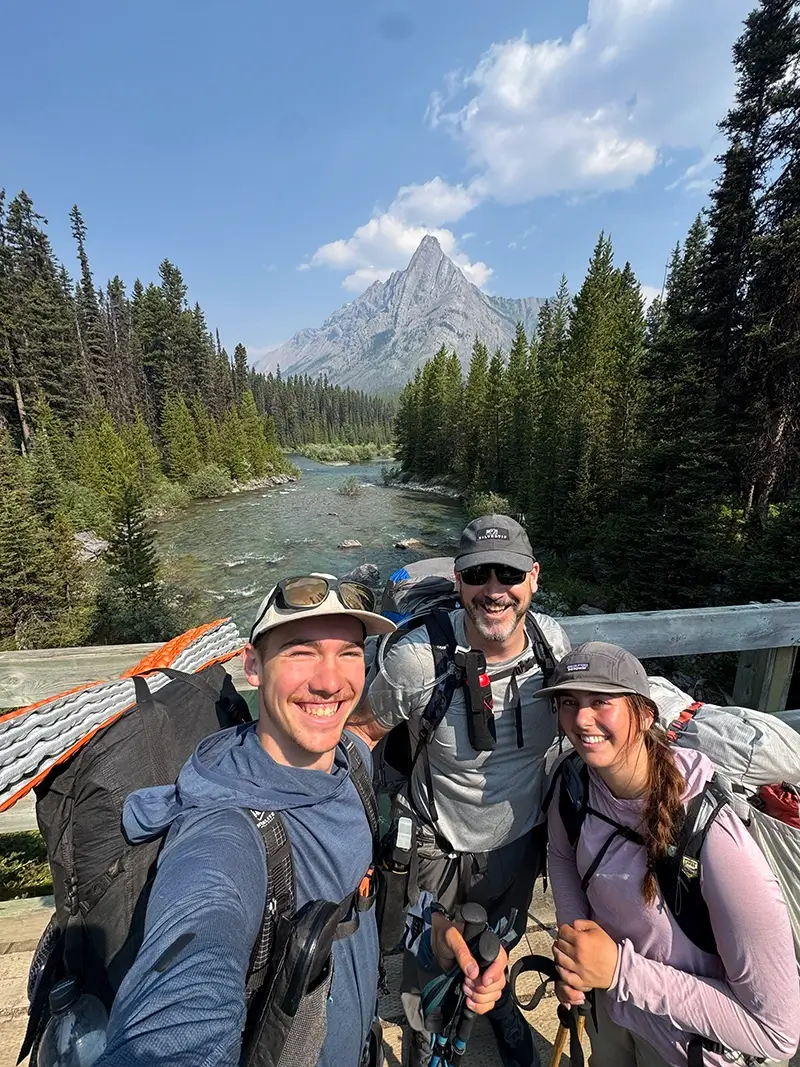
Bruce was going to get me out to Mount Shark, where I would meet up with Sam and his girlfriend Anna. The GDT is broken up into sections A through G. Sam and Anna had already completed sections A and B, racking up some 350km in the process.
Bruce was my man, and I met up with him for a beer and a meet-and-greet the day before. He was a bit of a hellman — a downhill skier, coach, mountain biker, and avid hiker. I suspect he too was a little unsure of how ready I was for what lay in front of me, given the state of my injuries.
Bruce and his wife Christina picked me up the next morning at 8am and we set off on the 90-minute trip. I must say, who goes out of their way on a three-hour return trip to drop someone off they only met the day before?
Like I said, the hiking community is incredible. There really is such camaraderie — something undeniably lacking in the surf community. The majority of surfers are a self-centred bunch.
So, I meet up with Sam and Anna. I’d missed my boy so much. It was so good to see him again, but after a few minutes it was down to business, with Sam sifting through my pack.
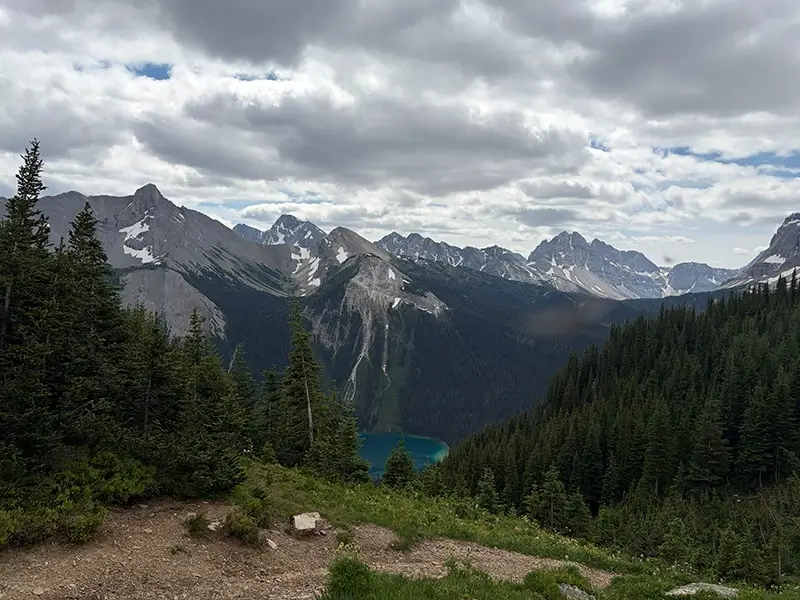
“How can it be 18.5kg? You’ll never carry it the distance, Dad,” he proclaimed.
Sam quickly started discarding my pharmaceutical packaging, which I’d kept for the sake of customs, and proceeded to drop everything into a ziplock bag — vitamins, Panadol, etc. I would only learn a few days later, when I went searching for them, that he had accidentally turfed out my Voltaren — pills, packaging, and all.
“Pain is all in the mind. I don’t need them,” I would tell myself soon after.
My David Goggins book and half my water supply (admittedly, I had around 4.5 litres on me at the time) would soon follow. I also offloaded to Sam the 1.5kg of lollies he had insisted I bring over from home.
I was now down to a more manageable 14kg pack, which I would later find out was still way too much. It’s amazing how a few hundred kilometres with countless long and steep ascents and descents can help you rationalise what’s essential and what’s not, and how every gram counts.
‘All for the gram’ takes on a new meaning out in the wilderness — and not the pretentious kind.
The first day we had, what I would come to understand, was an extremely easy hike, with no elevation, just under 10km. Unfortunately for me, I had ignored my son’s advice to hike with my pack to get used to carrying the weight before I got over there for fear of looking like an outright tool walking our coastal paths back home.
I was already struggling despite the short distance.
It was going to be a long few weeks, I thought.
That night and the next day, I settled into our first camp, getting more familiar with my gear. Yes, I had not done any overnight hikes prior to this, and here I was about to tackle one of the most formidable ones around, with no town in sight for the next nine days.
Monday rolled around, and that’s where sh*t got real.
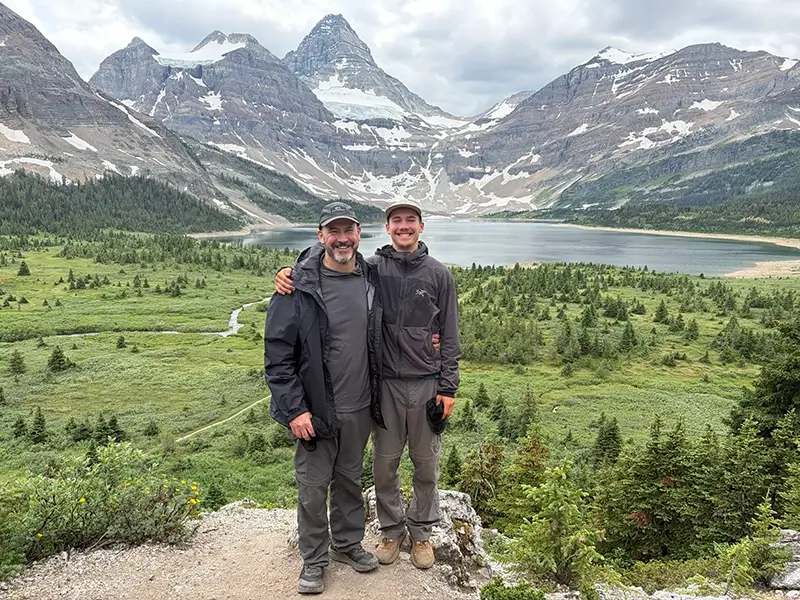
One moment we were meandering along this grassy ridgeline full of wildflowers, looking over the majestic Marvel Lake, and I was thinking to myself, this is something else. Pretty soon we started on our first steep ascent, Wonder Pass, and it really was something else.
Unfortunately, compared to what was to follow over the next few days, it was an absolute piece of cake. Wonder Pass sits at a wonderful elevation of 2,400 metres. Remember, the greatest elevation I had experienced prior to this trip was Mount Wellington in Hobart, which is 1,271 metres.
Interestingly, the highest mountain on mainland Australia is Mount Kosciuszko, standing at 2,228 metres. So, on our second day, we had already scaled a pass — not a mountain — that was higher than anything in Australia.
If only I knew what the rest of the hike had in store, I may have turned around there and then.
At Wonder Pass, I was already seriously reconsidering how ready I was for the GDT and worrying about what I had gotten myself into. I was rooted. My back was sore, my ankle was sore, and the mosquitoes were insane.
The thing about the GTD is that, when you’re questioning your ability, it’s like riding a rollercoaster: once you’re on it, there’s no getting off until it’s over. You’re in the middle of nowhere, and unless you want to SOS a rescue chopper at the cost of reportedly around $10k, there’s no easy exit.
I’d already spent enough getting over here. I wasn’t going to spend more, no matter how much pain I was in.
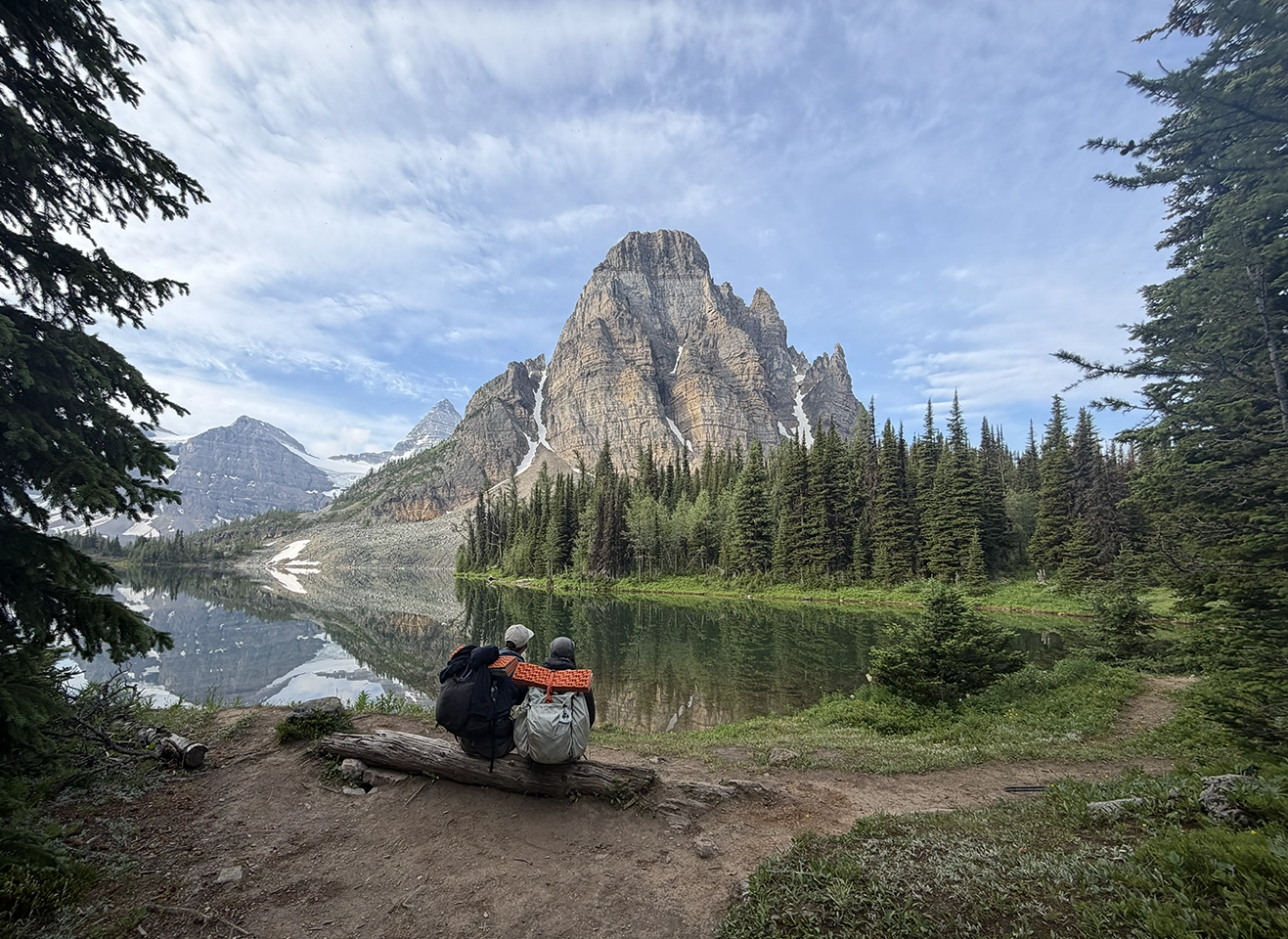
Later that day, we ended up at the stunning Lake Magog, an alpine lake in Mount Assiniboine Provincial Park, British Columbia, sitting directly beneath the massive, pyramid-like peak of Mount Assiniboine. It was a nice reward after the slog.
It’s probably one of the most popular and, consequently, most populated sections of the GDT, accessed by overnight hikers and thru-hikers alike (thru-hikers are those crazies who undertake extensive hikes lasting a week or more). We were glad for some crowds, as we would later find out.
After setting up our campsite, we ducked the 1.2km down to the nearby Assiniboine Lodge (what’s a few more k’s?) for a piece of cake and a beer. Hey, I’d already gone three days
without the amber nectar!
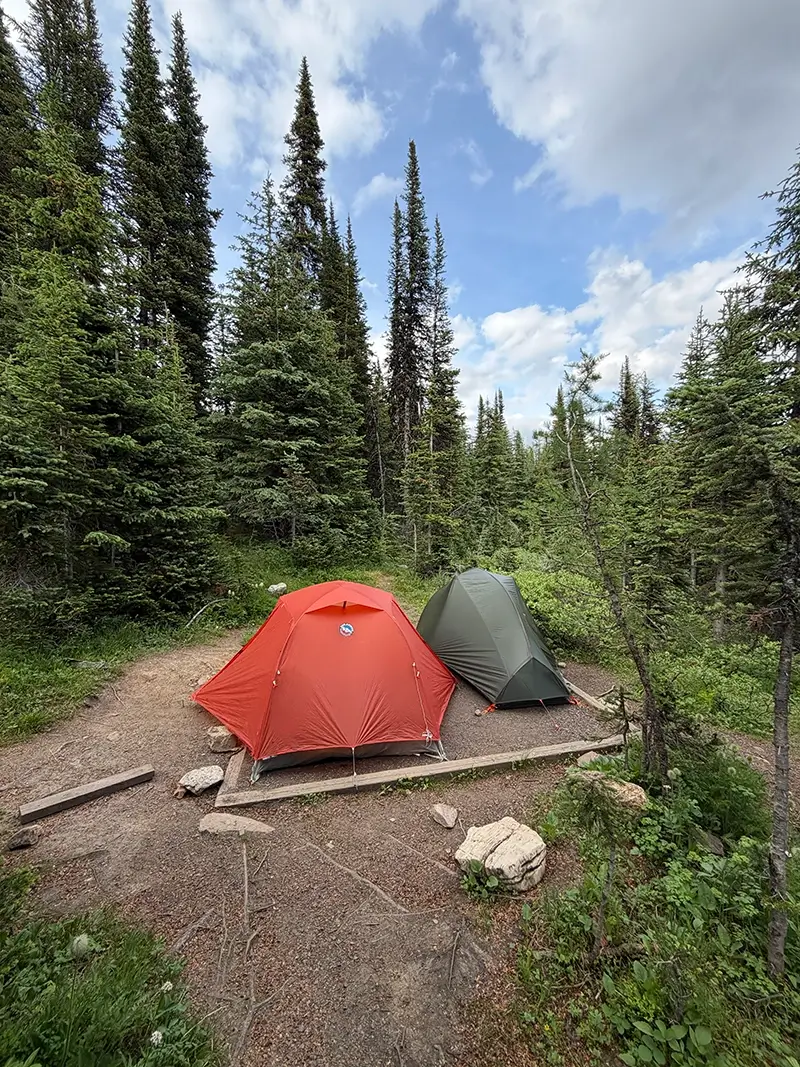
Later that night, around 7pm, while it was still light (it doesn’t get dark until 10:30pm) we had our first real wildlife encounter. After hearing a commotion outside our tent, we could
pretty soon decipher the universal calls of, “Hey bear!”
‘Hey bear’ is what you say when warding a bear off as you enter the woods and don’t know what lies in front of you or when you indeed see a bear. Being two syllables, I guess it’s quicker and easier to say than “F*ck off, bear” for example, which is of course three syllables.
Given my luck, at this exact moment I was changing into my shorts for bed and was completely starkers.
Great, I thought. I’m going to be attacked in the nude.
While fumbling for some modesty, Sam unzipped his tent right beside me and stood up in his underpants to see where it was, quickly dropping back down.
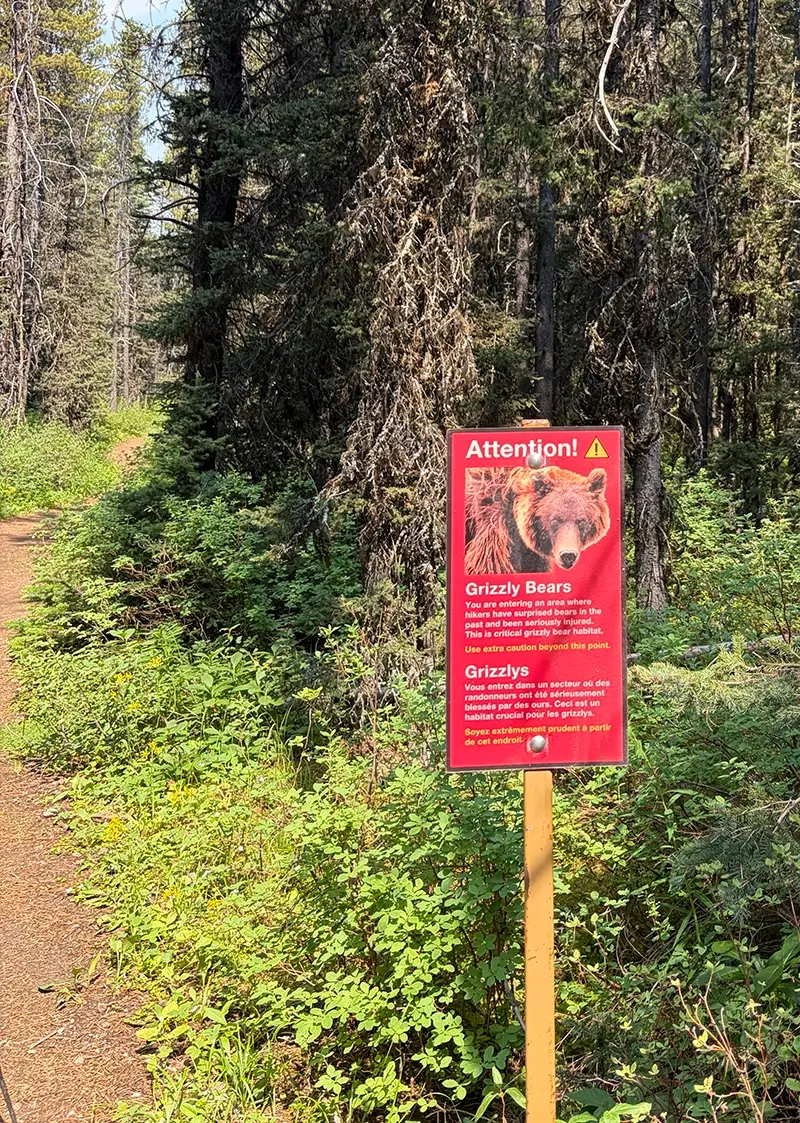
“F*ck! Hey Dad, don’t move. Grab your bear spray. There’s a friggin’ huge grizzly three metres from our tent.”
Given my tent was made from 100% lightweight ripstop nylon, I was 100% positive there was absolutely no way this 350kg ball of muscle with 10cm claws and jaws capable of crushing a bowling ball was getting through. But I grabbed my spray just in case.
Thankfully, it cleared the area not long after, possibly perturbed by the smell.
Thru-hikers do possess quite the stench, given you’re wearing the same clothes, jocks, and socks for weeks on end. And no, you can’t wear deodorant for fear of attracting bears and cougars.
The encounter left me feeling all the more exhausted, which was further compounded by Sam telling me of his plans for us all to get up at 4am the next morning to catch the sunrise from The Nublet.
“Don’t worry, Dad, we won’t take our packs. It’s just a little side quest, like scaling Mount Coolum.”
Was sunrise the next morning impressive?
It was absolutely stunning.
Funnily enough, however, I do recall Mount Coolum back home is only 208m in elevation and takes about 20 minutes to scale.
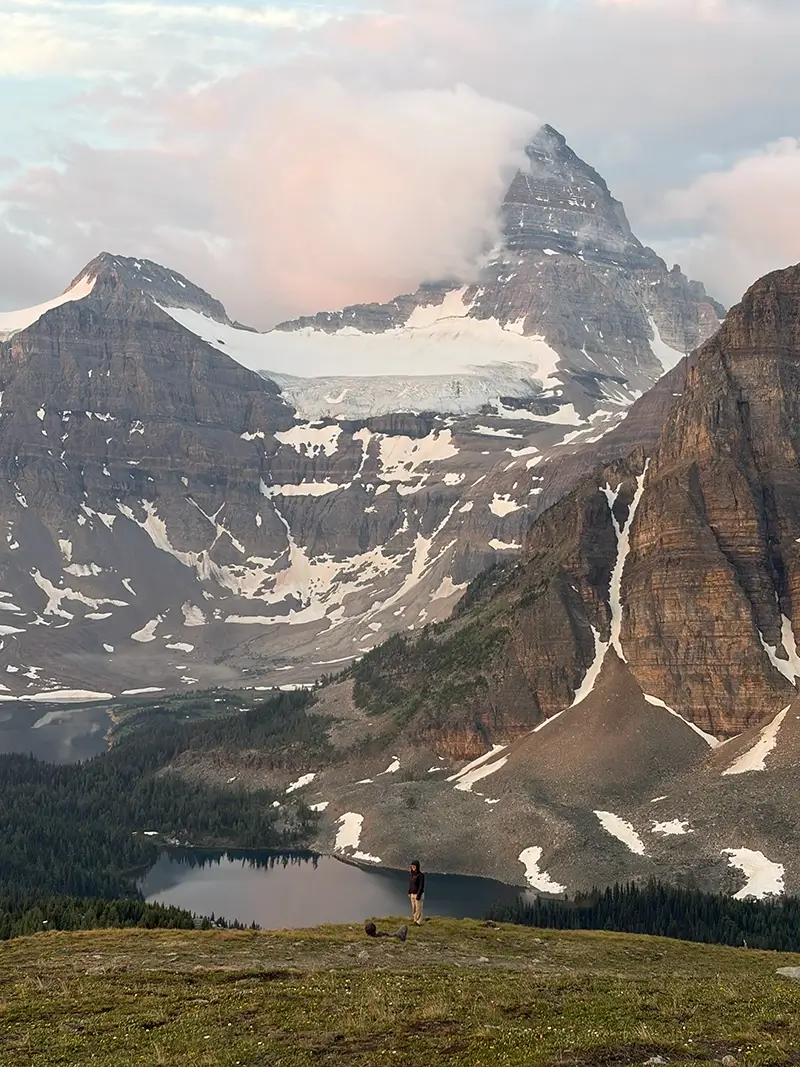
By comparison, The Nublet sits at an elevation of 2,530m (higher than the previous day’s Wonder Pass) and takes approximately 1.5 to two hours of continuous moving time to hike from Lake Magog Campground to the summit.
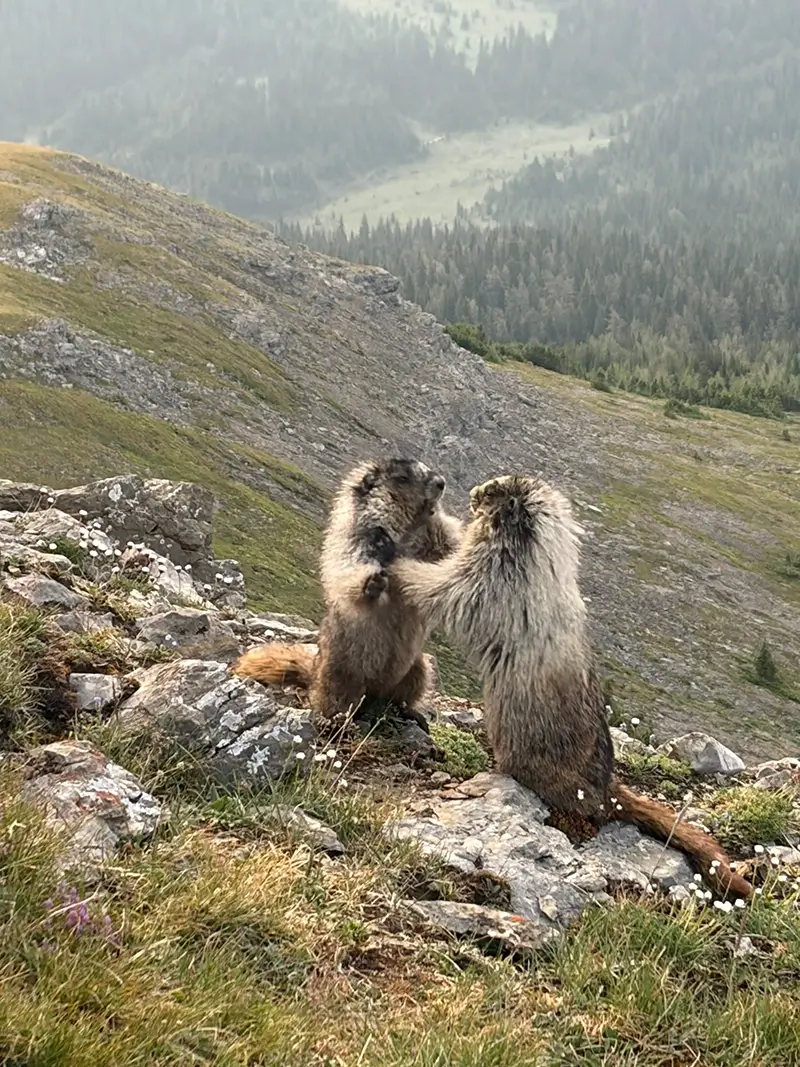
We took in the surrounds, watched the sun rise, marvelled at ‘the serenity’, played some tunes, and saw the best fight between two marmots since Justin Gaethje rearranged Ilia Topuria’s face — and it lasted just as long.
Following this fun little 7.2km side quest, we then hiked a further 27.4km later that day, with another 920m of elevation gain towards Howard Douglas. I was spent and Sam set up my tent — hey, that rhymes.
I felt like a burden.
Sam assured me it was no drama and he was simply happy to have me along for the hike. The next day, I awoke with renewed enthusiasm.
This hike is just as much a mental battle as it is a physical challenge. With an improved mindset, I set off ready to endure the pain that was to follow. It didn’t take long. Five minutes, in fact, and I was back in the grind with another ascent. Though not as bad as the previous day, I was still fatigued.
Later that morning, we reached the ski resort of Sunshine to restock and refuel. I was pleasantly surprised because I did not expect to see any form of civilisation for at least another week.
I had a coffee, my first real one in four days, and a ham-and-cheese toasted sandwich. Make that three of them.
I had sworn off meat for the previous 10 months, but I’ll admit this small lapse did give me a burst of energy, which was needed because today was a 35km day with a total ascent of 971m, a descent of 1,320m, and a grade of 85.9m/km.
It was tiring, to say the least, but I was soon to learn that anything under 1,200m of ascent or descent was a good day, and any grade less than 100m/km was also pretty good.
Essentially, the ‘grade’ is the steepness of the trail or slope. A trail’s percentage grade measures how quickly the elevation rises over a horizontal distance. There was one exception, though: Citadel Pass, flanked by Citadel Mountain and the aptly named Fatigue Mountain.
This section’s final northbound climb out of the Valley of the Rocks is notoriously exhausting, and rightly so, especially with a heavy backpack.
Because you’re climbing out of a low valley trough, you have this steep, sustained (meaning no level bits to catch your breath) 4km climb. You gain 435m in elevation with an average grade of 12.1%, with grades of 18% to 22% on the loose, switchbacking scree slopes.
For context, an average trail grade over 10% is considered steep, and anything sustained over 15% is a serious cardiovascular grind. Combined with the high altitude — topping out over 2,400 metres — and the lack of shade or water along that stretch, it was particularly brutal.
I awoke on the morning of the sixth day completely exhausted.
While the day prior I’d been relatively positive, Citadel Pass had knackered me. The rocky scramble that opened this day did nothing to quell my negative mindset, nor did the 1,556m descent that followed.
I soon learned it was just as painful going down long, steep descents as it was tackling steep slopes.
A little after midday, we crossed the highway and settled at a roadside car park, where day hikers head up to Floe Lake for some lunch.
I seriously considered hitching my way out of there.
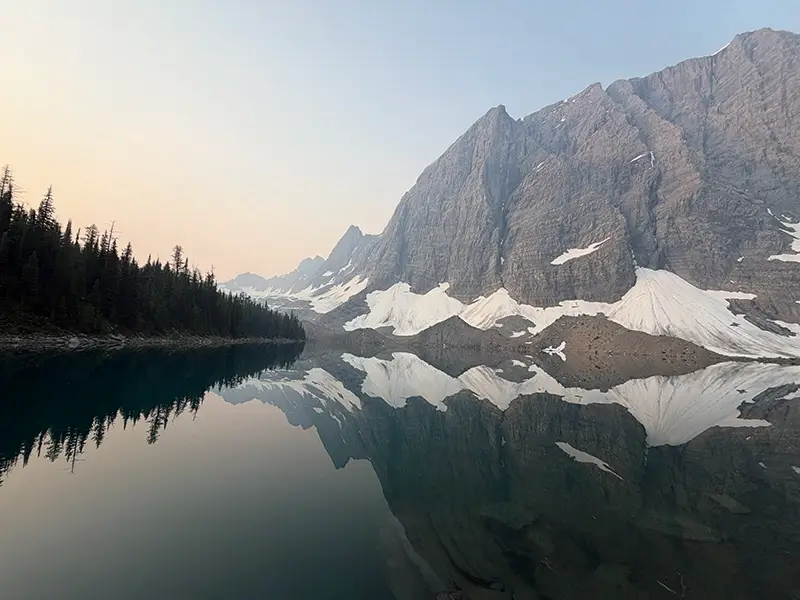
I was convinced I was not up to it. Plus, I knew the upcoming ascent to Floe Lake was considered one of the most challenging of the entire Sections C and D — a 4.5-hour, 11km hike with a massive 976m elevation gain in one hit.
I decided there and then that my only way forward was to lose some weight from my pack and make an offering to the hiking gods. I removed my AG1 supplement powder, short-sleeve T-shirt, fleece, back brace, ankle brace, coffee grinder, and coffee beans.
I was only going to proceed with the bare minimum and, being in so much pain, what was a little coffee headache thrown into the mix? And if my back or ankle played up, I was screwed anyway, so it was time to ditch these.
Seeing my despair, Sam then insisted on carrying the remainder of my food supplies—probably around 3kg. I was none too proud but complied nonetheless, and was later glad I did.
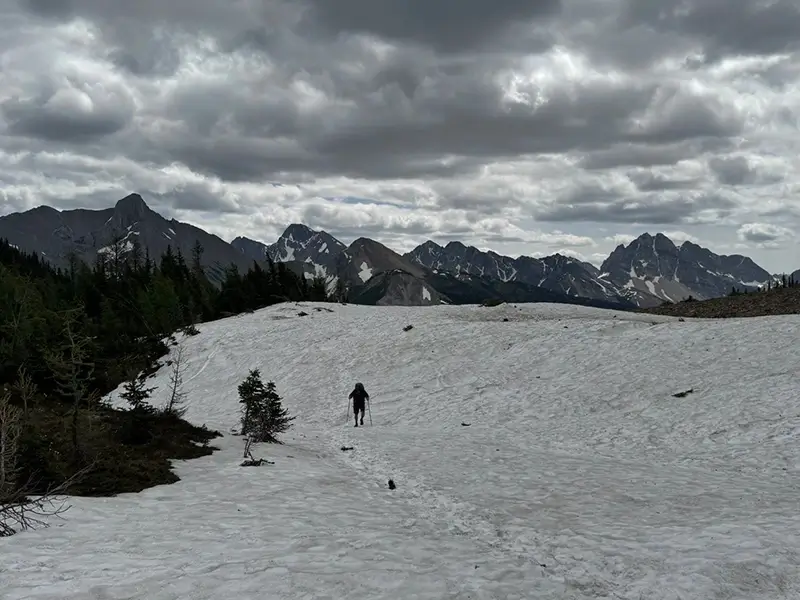
The final two kilometres saw a gain of over 450m with a sustained grade of 20%, with parts up to a 30% grade, which I came to realise is near vertical and absolutely insane. It made everything I had experienced prior fade into insignificance. Getting to the top, however, made it all worthwhile.
The scenery was awe-inspiring and, best of all, we had it all to ourselves aside from another father-and-daughter pair.
Floe Lake is usually packed to the rafters with day hikers, weekenders, and thru-hikers. We later discovered it was because the campground had not yet opened due to predicted late-season snow.
After Floe Lake, I did start to get my trail legs.
I became used to the daily grind of being breathless through steep ascents and descents and learned to enjoy any flat spots, even though they usually only lasted for five or so minutes amid a 12 to 13-hour hiking day.
My steady flow of electrolytes through my backpack bladder also assisted, as did my nightly ritual of cold-plunging into any water source I could find — lakes, rivers, and streams.
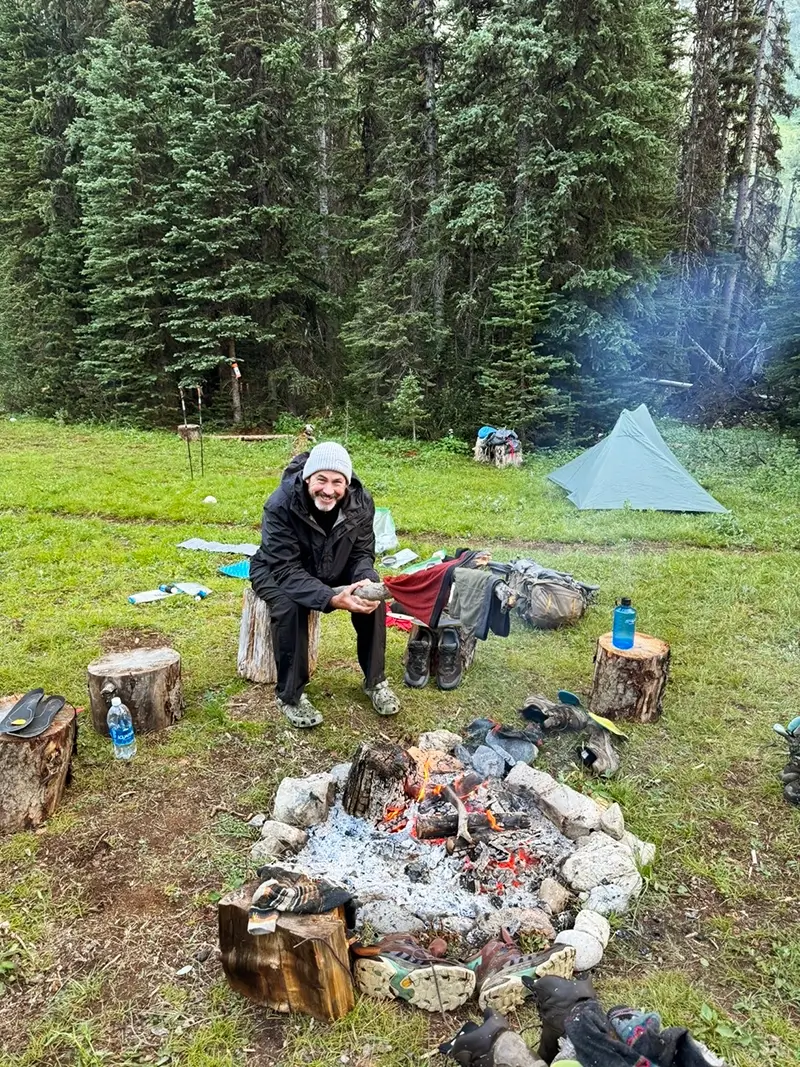
I was also getting the exhausted camp setup down pat: tent up, small hiking mattress inflated, sleeping bag sorted, water filtered (often with the help of Sam), dinner consumed.
Note I said consumed, not enjoyed.
Rehydrated meals leave a lot to be desired, along with the volume you need to consume to get the calories you need. I ended up dropping 10kg over the course of the two weeks on trail.
Day nine saw us wander into the town of Field. Civilisation was a welcome blessing.
We headed to the local Yoho Corner Store and engorged ourselves on all manner of food we could get our hands on. It was also a welcome chance to wash our clothes for the first time on trail.
It’s a pleasant indulgence when you’re travelling with nothing but two pairs of socks and jocks and a single shirt and pair of pants. We dined that night at Truffle Pigs, a popular local restaurant and lodge.
After our two meals that day, I was convinced Field had become somewhat of a foodie destination. I even enjoyed an IPA with my meal. I so love beer and missed it dearly, but was not game to have a second because I was so fearful for my life and what the next day had in store.
I had given up asking Sam what distance and elevation lay in front of us. Blissful ignorance was now my state of mind — deal with it as it comes — and that mindset served me well for the remainder of the trek.
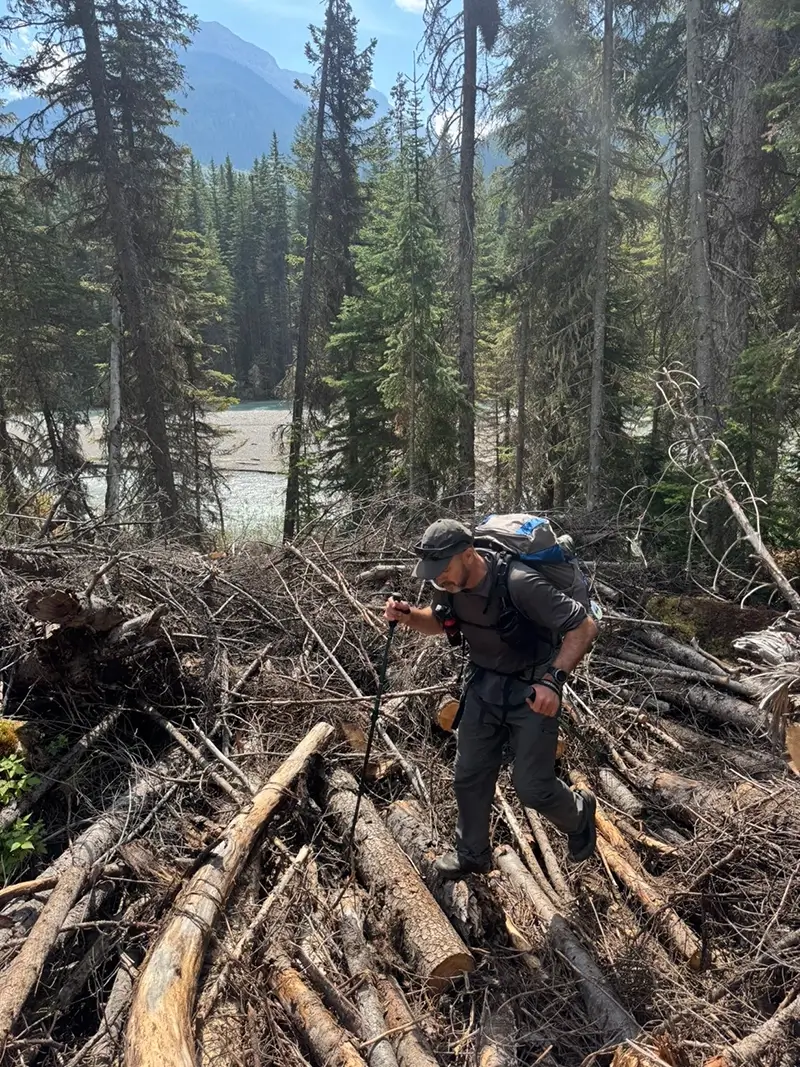
Our ascent from Field was pretty brutal, particularly once we encountered a significant amount of deadfall (fallen trees) thanks to a recent avalanche. It slowed our advance to around 1 to 2km an hour, and the day only got more interesting from there.
Sam had chosen the Kiwetinok Alternate Route as a means of avoiding the dense valley bushwhacking of the main trail, albeit extending our day’s hike to 34 kilometres.
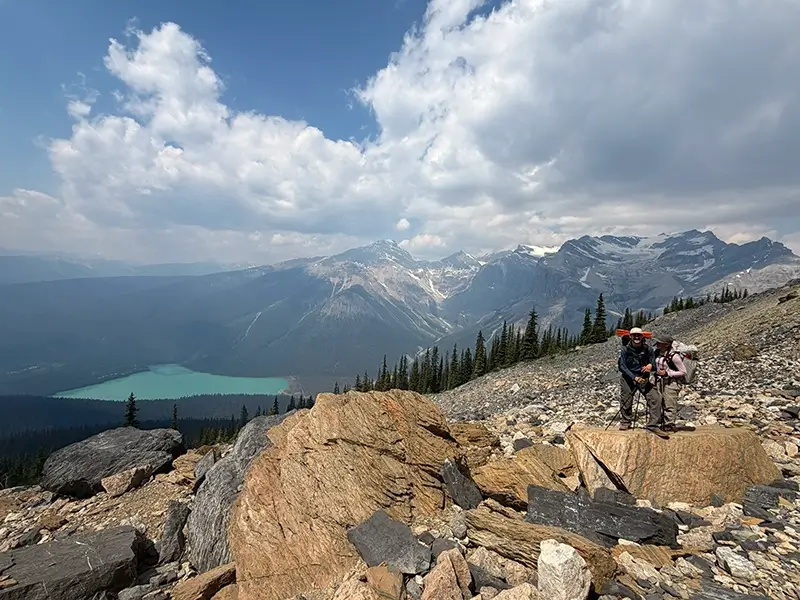
On our way to the pass, we trekked parallel to the famed Burgess Shale fossil beds, one of the world’s most significant palaeontological sites containing extraordinarily preserved fossils from a marine ecosystem around 508 million years old.
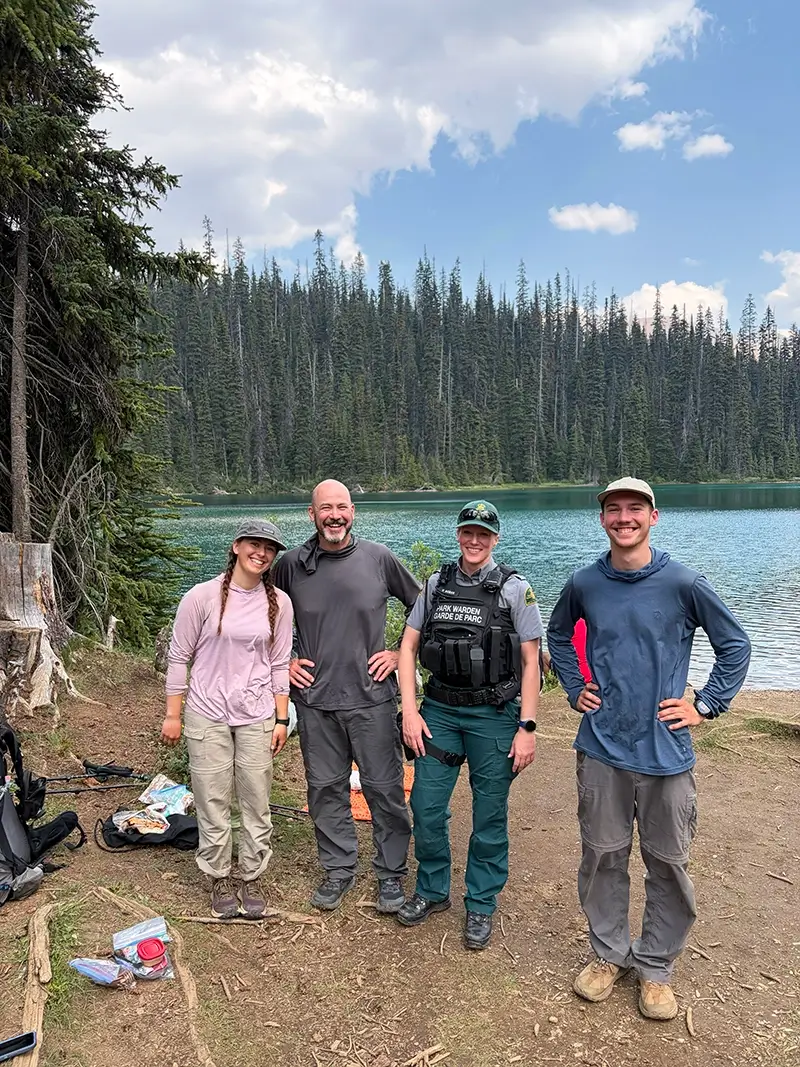
My endless stopping during this section, thanks to being exhausted, somehow attracted the attention of a geology group 100 metres above us. They reported it to the local authorities and, an hour later, as we approached Yoho Lake for a break, we spotted a helicopter hovering above.
Having heard three hikers had died on the trail since I joined Sam and Anna, we presumed there must have been another serious injury. Anyhow, the chopper landed, and all three of us were promptly arrested on suspicion that we had entered the ‘restricted zone’ and stolen fossils from the shale field.
Apparently, rare fossils can fetch tens of thousands of dollars on the illegal market, and taking them is a serious offence. One bloke caught with 45 Burgess Shale fossils in 2022 was fined $20,000.
After a two-hour interrogation, a pat-down and all of our backpacks being turned upside down, it was all smiles. It certainly gave us an interesting story to tell and gave me a much-needed additional 1.5-hour break. I was so grateful for the rest.
The officers were only doing their job, and I was only too willing to give them a chuckle with my explanation that no amount of money would have motivated me to take another step further up the mountain than I needed to, nor put any additional weight into my backpack.
I think they could see how exhausted this old man was and took pity on me.
From there, we traced along the world-renowned Iceline Trail, a high-elevation shelf that puts you eye-to-eye with massive hanging glaciers, alpine tarns, and the thundering Takakkaw Falls directly across the valley.
It involves navigating steep, loose scree, talus slopes, and seasonal snow patches before heading down into the remote headwaters of the Amiskwi River, where we stayed the night. My nightly ‘bath’ was certainly a tad chilly on that occasion.
In the days that followed, there were lots more steep mountain passes to scale (and descend), loads of amazing scenery, and probably the most gruelling pass of all.
I celebrated my 56th birthday on the 12th day of the trail with a superb 34km trek, with not a beer in sight. To celebrate, I even managed to tear my quad towards the end of the day. Between my ankle, back, and now quad, along with my feet being covered in blisters and rotting from countless river crossings, I was now hobbling along the trail like Quasimodo.
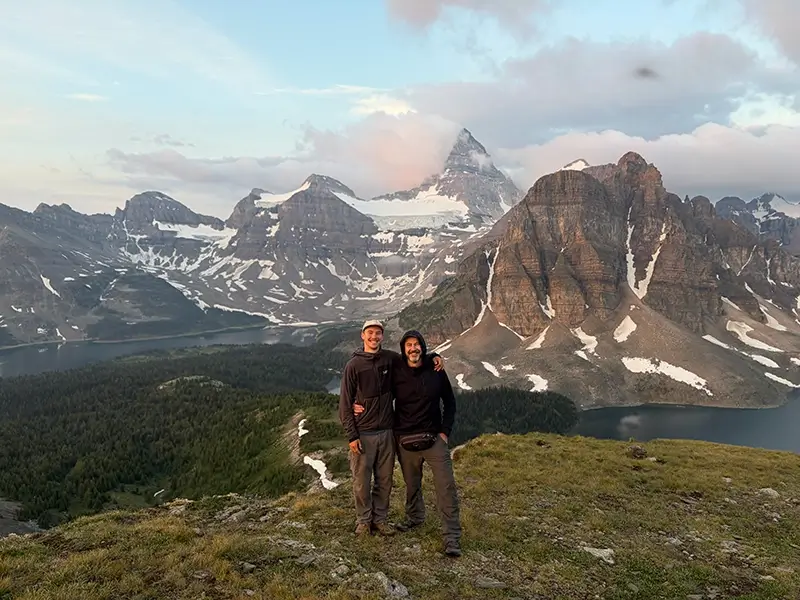
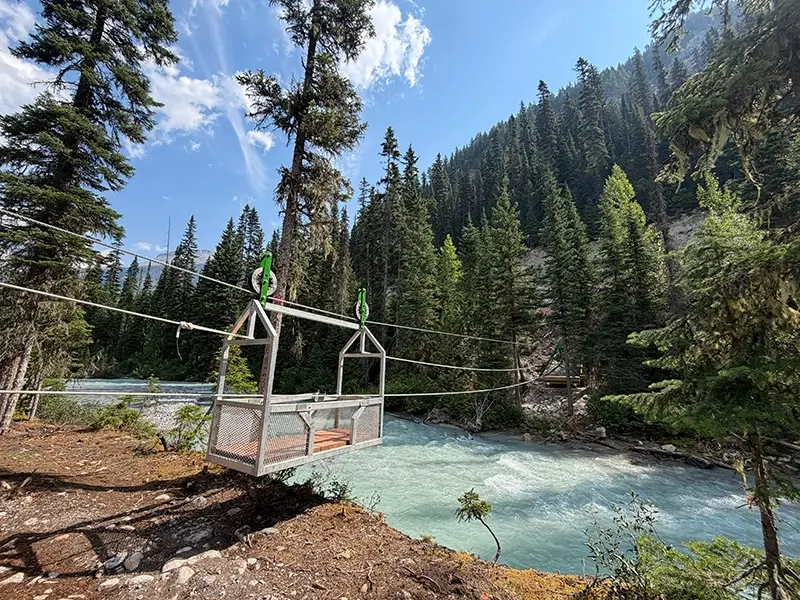
Jokes aside, it was an amazing few days, and the human-powered cable-car aerial ferry over the rapids at Blaeberry River was a highlight.
The final 34km day entailed 15+km of continual river crossings and a final 6km highway slog back to the Saskatchewan River Crossing service station and hotel.
After some 13 days and 330+km, my trek through Sections C and D of the Great Divide Trail had come to an end. I was so grateful to get the opportunity to share this with my son Sam and his incredible girlfriend Anna. It was beautiful to watch the two of them together.
A hike of this nature would cause any sane, rational couple to have at least one argument or terse moment, but not them. In all sincerity, it inspired me to return home a better version of myself.
The two of them were awe-inspiring and absolute machines on trail. Having both worked the prior snow season in ski patrol, they were fit as hell and near impossible to keep up with.
With the hike now over, I got a wash on — you can only imagine the stench — and promptly put on my rain pants (the only item that didn’t go in the wash) sans underwear, my Crocs, and a poor-fitting tourist shirt I had just purchased at the service station.
All manner of pride had been stripped away.
I then headed to the local pub for the strongest IPA I could find.
The whole experience was, quite sincerely, something I will never forget — the good and the challenging. If I’m being honest, I don’t think I could have done another single day on the trail. I was spent.
Though I didn’t think it was possible, this hike made me love my son even more
than I already did and left me bursting with pride at the man he has become.
Amazingly, he’s only 21. As for his girlfriend Anna, what an incredible young lady. I would willingly welcome her into the Swan family at the drop of a hat. She’s a wonderful human being, inside and out, and absolutely stunning.