
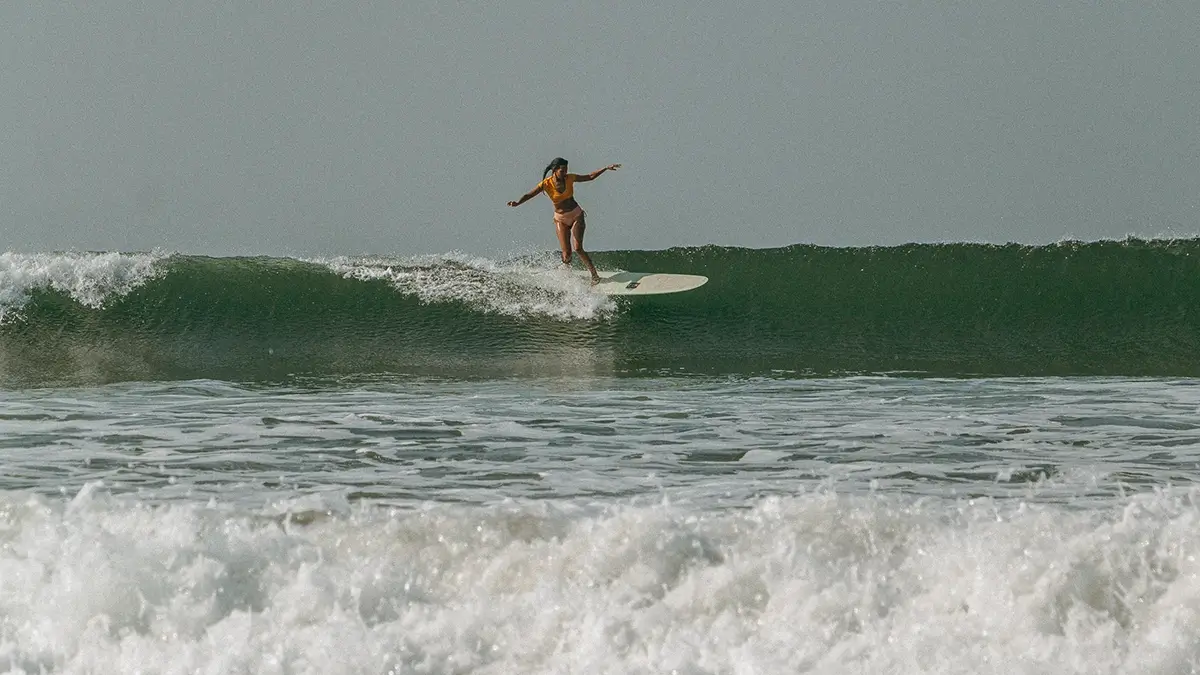
In this edition, we visit the bustling, chaotic, and colourful kingdom of India. Local surfer, Tapashi Devchoudhury, helps us uncover a booming surf culture that’s quickly becoming one of Asia’s central surfing destinations.
When you consider India’s enormous coastline (over 7,000kms) and even larger population (1.47 billion), it’s amazing to think that the Asian powerhouse nation has yet to produce the next Kelly Slater or Stephanie Gilmore. India’s coastlines are littered with reef and beach break setups. The surrounding islands have been featured in some of the most iconic surf films, and yet it still feels like surfing has yet to fully arrive upon its shores.
Surfing’s meagre popularity in India undoubtedly stems from a lack of historical beach culture. Although the country has harnessed the potential of its coastal tourism appeal in recent decades, local Indians are still largely unfazed by the surfer-beach lifestyle that western culture obsesses over.
Most Indians lack appropriate water safety education and are genuinely afraid of the ocean. Indian women are raised believing that if their skin sees too much sun, no one will marry them. The sport’s stunted growth also comes down to a lack of funding in water sports, with the country’s favourite sport, cricket, hogging the limelight and leaving little room and funding for alternative action sports.
However, the ocean has always had its way of drawing people in. Regardless of social expectations, superstitions, age-old traditions, or cultural preferences, if one spends enough time by the ocean, they’ll eventually surrender to its beckoning — just ask Tapashi Devchoudhury.
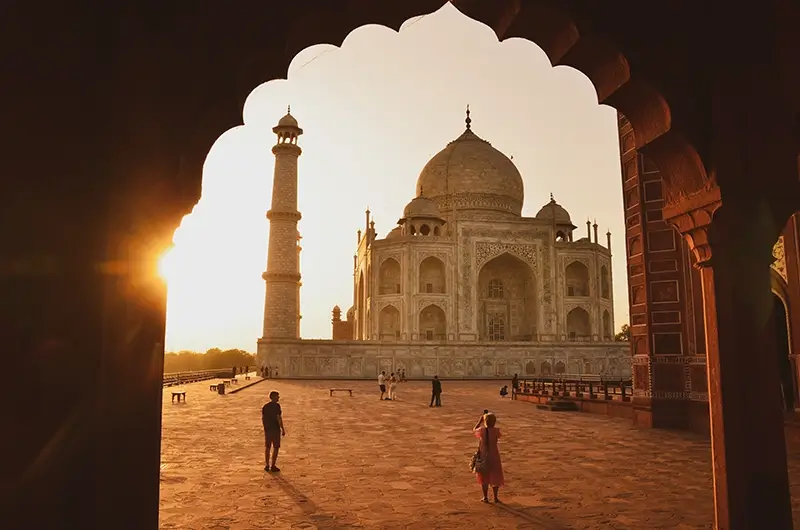
Tapashi was born and raised in the hillside town of Guwahati. And for those who don’t have an encyclopaedia at hand, Guwahati is one of the country’s furthest cities from the ocean, situated in the far northeastern state of Assam, bordering Bhutan.
“I grew up away from the ocean, but was lucky enough to study all over India. While I was doing my master’s on the west coast of India, I started living by the sea. During that period of my life, I felt that something in me had changed forever,” she said.
It may have been the west coast where Tapashi found her appreciation for the ocean, but it was the east coast where she fell in love with surfing. Her weekends were filled with wax and waves from sunup to sundown, squeezing in as many sessions as her work commitments would allow.
However, the desire to explore her own country through her newfound passion was strong, and Tapashi did what most can only manage to dream of.
After almost two years of surfing on the weekends, in 2014, I suddenly had the urge to leave everything behind, which was a full house, and move lock, stock, and barrel to surf across the coast of India.
According to Tapashi (India’s only surfing mum) surfing is generally seen as something Indians tick off the bucket list — a one-and-done sort of experience that’s misunderstood, difficult to approach, and expensive.
“With that said, we do see the growing numbers of Indian men and especially women really pushing socio-cultural boundaries and embracing surfing not only as a sport, but as a lifestyle. The numbers are growing exponentially.
“There is, however, a lack of clarity when it comes to regulation. I’ve faced backlash from the authorities, who even asked me to register my surfboard and get a licence for it.”
India’s confused perception of surfing sure is perplexing, considering the sport first arrived on the shores of the subcontinent back in the 1970s when the famous Swami Jack (Jack Hebner) caught the attention of local fishermen.
The wandering Hare Krishna monk drew crowds from all over, inspiring local fishermen to join him in the water, using discarded wooden doors and sawn-off planks of wood for surfboards.
Legendary Indian fishermen-come-surf pioneer Velu Murugan epitomised the resourcefulness and determination that Indians are known for when he collected a broken board and taught himself to surf just by watching visiting tourists surf along the Tamil Nadu coast.
Although surfing arrived in India over 50 years ago, Tapashi can’t help but feel that only recently has it been embraced.
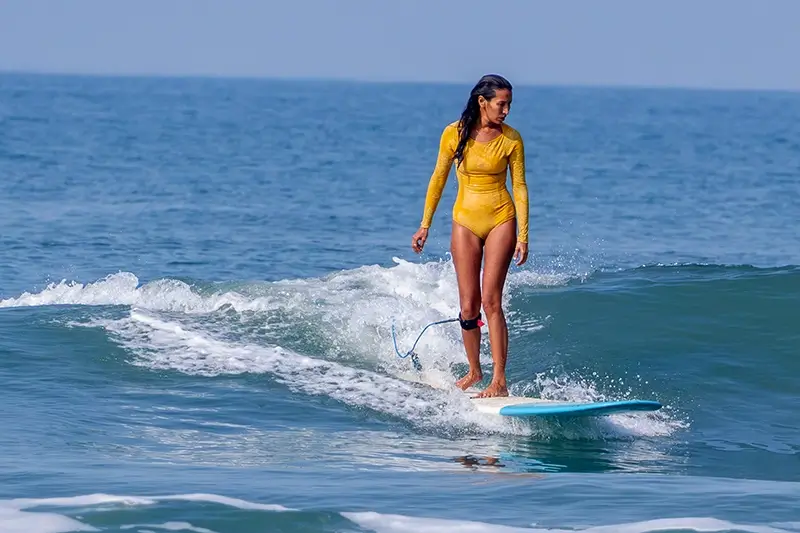
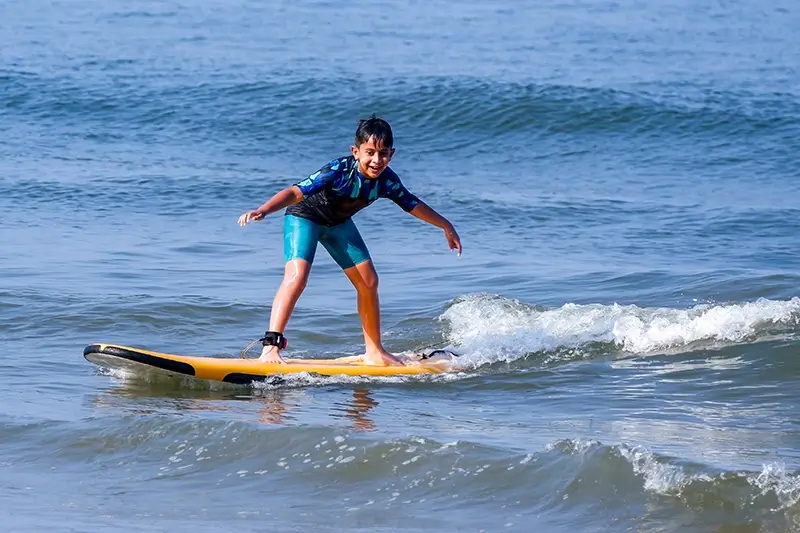
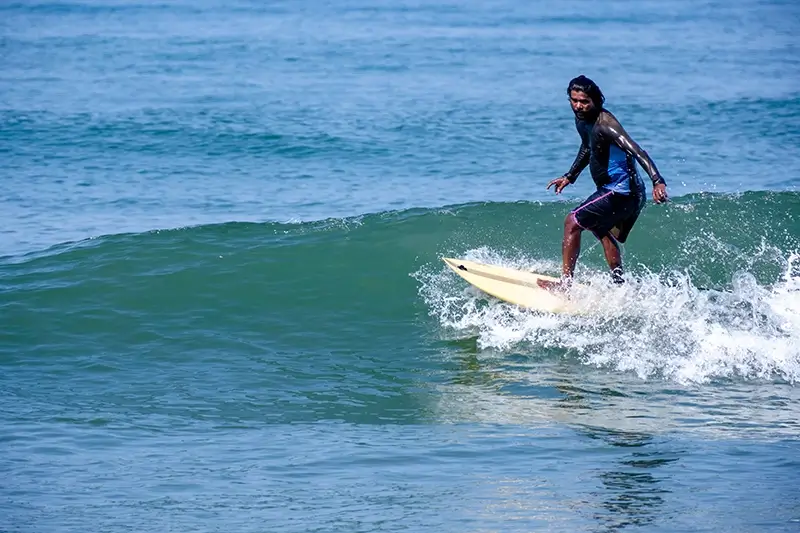
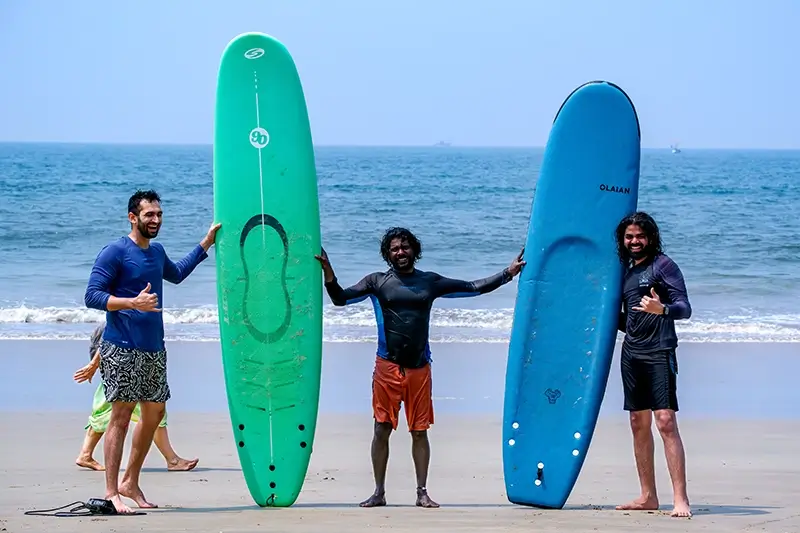
“There are hundreds of such stories. We’re lucky to see the beginning of a surf culture unfolding in India. Having read and watched documentaries of surf cultures developing around the world, it’s incredibly humbling to be at the beginning of this story.”
Now you wouldn’t have a surf culture without actual waves, so what do the lineups look like along India’s 7,000kms of coastline?
After a quick glimpse at the map, it’s not hard to see why this country is dubbed the next surfing mecca. It proudly sticks out in the middle of the Indian Ocean, open to practically any hint of swell that makes its way across the world’s warmest ocean.
But it’s not that easy, and even though India has a largely unobstructed coastline and is seemingly in prime position to receive swells from anywhere in the Indian Ocean, it’s surrounded by a shallow continental shelf that gradually slopes, dissipating wave energy significantly before it reaches the shoreline.
India is also on the wrong side of the equator in a swell sense, meaning those Roaring Forties and Furious Fifties winds that produce huge groundswells are too far away to produce anything worth getting the gun out for. Disappointing if you’re a big wave charger, but if you’re into mellow, warm-water, fun-sized waves, then India could well be your spot.
One can tour the Indian coastline and happily surf every day of the year, provided they’re on the right side at the right time. The east coast typically lights up from July to January and has everything from punchy point breaks to hollow beachies, and is genuinely preferred by shortboard riders.
For the longboarders like Tapashi, the west coast is a dream — you just have to keep an eye on the monsoons.
“The west coast is more mellow — perfect for longboarders with a smattering of fun waves for shortboarders.
“The best swells of the year come in post-monsoon [between October and mid-December] and pre-monsoon [between April and June]. Post-monsoon waves are cleaner and peel better, while pre-monsoon may be choppy at times.”

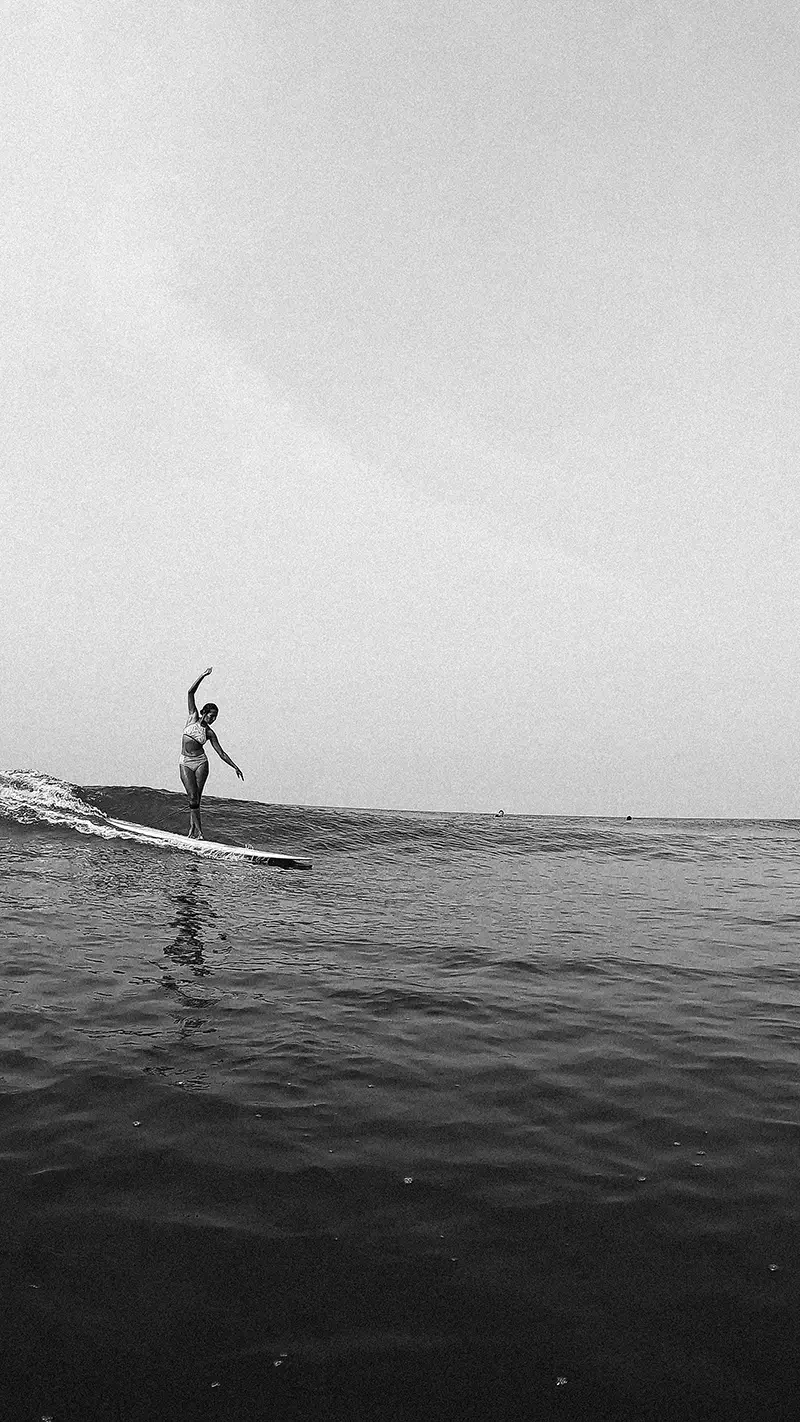
India’s south coast is perhaps the most consistent and advanced surfing region in India and receives the brunt of most swells before they make their way up either coast.
For those wanting to venture a little further, the Lakshadweep and Andaman Islands offer the ultimate tropical surfing experience. However, getting there requires some serious logistical know-how, with permits, boat access, and off-limit areas making you earn every single wave. But if you’ve ever seen Dave Rastovich’s part in Taylor Steele’s Castles in the Sky, you’ll know it’s well worth a crack.
Make sure you bring your Knobs Wax, as surfboards and accessories are still relatively hard to come by according to Tapashi, who relies on international friends to satisfy her surf necessities.
“Materials are difficult to come by, so we always ask friends to bring us boards, fins, wax, and leashes from overseas. There’s definitely not enough supply for an exponentially growing demand.
“It’s still very grassroots. If you’re expecting California or the Gold Coast, this may not be the place for you.”
The Indian surfing revolution is brewing, and even though Tapashi is excited to see her country embrace surfing on a broader scale, she hopes it will be done sustainably.
“I would like it to develop with an openness to learning. We’re one-fifth of humanity with empty lineups to explore. I know it’s going to boom, and I hope it happens consciously with respect to nature and the people around.”
India is an intense travel experience, full stop. It definitely isn’t for everyone, and you’ll probably fall in and out of love a million times before it ultimately wins you over. Whether it’s a surf trip or a cultural exchange, as long as you come with openness, respect, and the spirit of aloha, the only risk is getting caught up in a booming surf culture and falling in love with a chaotic country.


