Whether it’s gearing up for the trip of a lifetime or getting stuck in a sticky situation, there’s never a dull moment when they’re around. It’s just something about them — a gravitational pull towards all things exciting. Andrew Mooney is one of those people.
We sat down to chat about the adventurous lifestyle and peculiar stories that he has amassed over his eventful 40 years on earth. From wild camping on remote Papuan islands while filming for a Netflix documentary (that caused more harm than good) to a three-week Canadian trip that turned into a three-month-long shoestring budget trip across the American continent, Andrew has lived a hell of an existence up until now.
He admits that he was weirdly obsessed with surfing even before he picked up his first watercraft.
“I had my mum buying me surf mags before I was even boogieboarding, but I think it was the pictures in the magazines that got me. I was obsessed with shots of guys in the barrel, sliding through a water tunnel. I just couldn’t get enough of it.”
Growing up on the Central Coast, Andrew was surrounded by some of Australia’s most iconic surfers, who undoubtedly helped shape his well-rounded surfing style, earning him the title of Australia’s Best Freesurfer in 2008.
An early obsession with barrels set the tone for a life of cylinder-chasing adventures, earning Andrew a reputation as a surfer who slayed big wave slabs for fun.
“I remember being a kid when my mum would take me down to MacMasters (on the Central Coast) after school on huge days. I’d trip out on the ratios — the tiny guys sliding down huge mountains. I was just fascinated.
“Mum would want to leave, and I’d kick up a stink, wanting to stay and watch until dark. But as I got more into surfing and the local community, it was a natural progression to paddle out and surf it myself.”


Andrew quickly became one of the Central Coast’s most talented surfers, leading to a stint on the Junior Series, where he discovered that talent alone sometimes just wasn’t enough.
“I started to do pretty well — making semis and finals — but I was getting a bit rebellious around 16 with partying. I wasn’t focused, and even though my surfing was good, I felt I wasn’t doing the right things to convert it into success.”
With Andrew’s on-land antics starting to reflect in his results, he turned his attention to a different kind of wave riding. It was around the time when big wave surfing was starting to gain coverage, and sponsors were investing in their team riders to go and chase big swells.
“I just wanted to show what I could do — that would’ve satisfied me. I thought I was as good or better than most and felt right in the mix, but I was messing around.
“So I thought, ‘F**k all you guys. I’m gonna surf the biggest waves.’ It was a bit egotistical — like, ‘Watch me go surf real waves while you’re flapping around Manly on two-footers.’
“I was over contests anyway. I wasn’t mentally in the right space to do well. But funny enough, when the waves got big, I’d focus and put everything into it.”
Andrew’s sponsor at the time, Quicksilver, were getting fed up with his extracurricular activities and the way they were affecting his competitive results, so they gave in to what seemed like the inevitable.
“They said, ‘Look, we don’t want you doing that. You’re wasting our time. You’re doing well with the big wave stuff — this is where you should focus. Here’s your budget and goals — go find the biggest waves and surf them.’”
Quicksilver’s blessing opened the door to a lifestyle of adventurous travel, taking Andrew around the world many times over, leading to some of the most outrageous tales.
His adventure into the Papuan jungle began much earlier than he could have known at the time. After his free-surfing career started to wind down, he began looking for his next career move.


“I guess when the money dried up from surfing, I did odd jobs and thought about what made me happy. I realised if I had good boards, I’d be happy. So, I decided to start making them.
“I was lucky, as I was still riding for Nirvana Surfboards. When they heard I was setting up a shaping bay, they asked me to come over to the States and shape for them. I spent three months just cranking out handshapes.”
After a stint in the United States, Andrew was sent back to Australia with the task of putting Nirvana Surfboards back on the map down under.
“I quickly learnt that I wasn’t really a board shaper yet. My early handshapes were okay — I used Bill (Cilia)’s templates and had a good feel for rocker and rails. But when I started with computer shaping, things got rough.
“I had certain ideas about what would work, but for about eight years, my designs were pretty bad. The more I tried to learn, the worse they got. Eventually, I went back to my early designs, but with a better understanding. Now, with experience, I can make anything work by punching curves into the program.”
So, how does all of this tie into surfing the remote jungle islands of Papua? Well, Andrew was approached by a group of Los Angeles film producers, who had connections to the Nirvana Surfboard brand.
The producers explained their idea of creating a surf-travel documentary that would explore the remote and isolated Papuan waves. For Andrew, having the chance to surf empty, never-before-documented, and potentially pumping reef breaks made the decision easy.
However, things took an unexpected turn, and Andrew found himself at the forefront of a project that was much more profound than just a surf-travel documentary. The team of surfers and film crew arrived at the harbour, where they began their expedition on outrigger boats deep into the island archipelago, guided by renowned filmmaker Travis Potter.
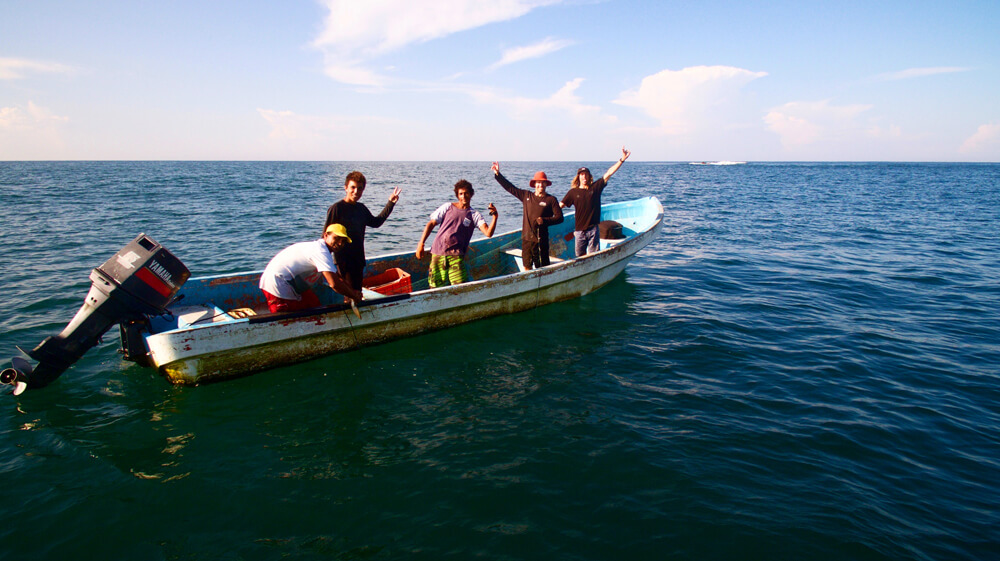
“We spent six hours cruising along the coast to spots Travis had mapped. We’d arrive at these densely covered islands and anchor the boat in a position ready to bail if things got out of hand with the locals.
“Travis would jump out, wade ashore, walk into the jungle, and signal when it was safe. He’d talk to local tribes to see if we could stay and if they had boats for fishing and finding waves.
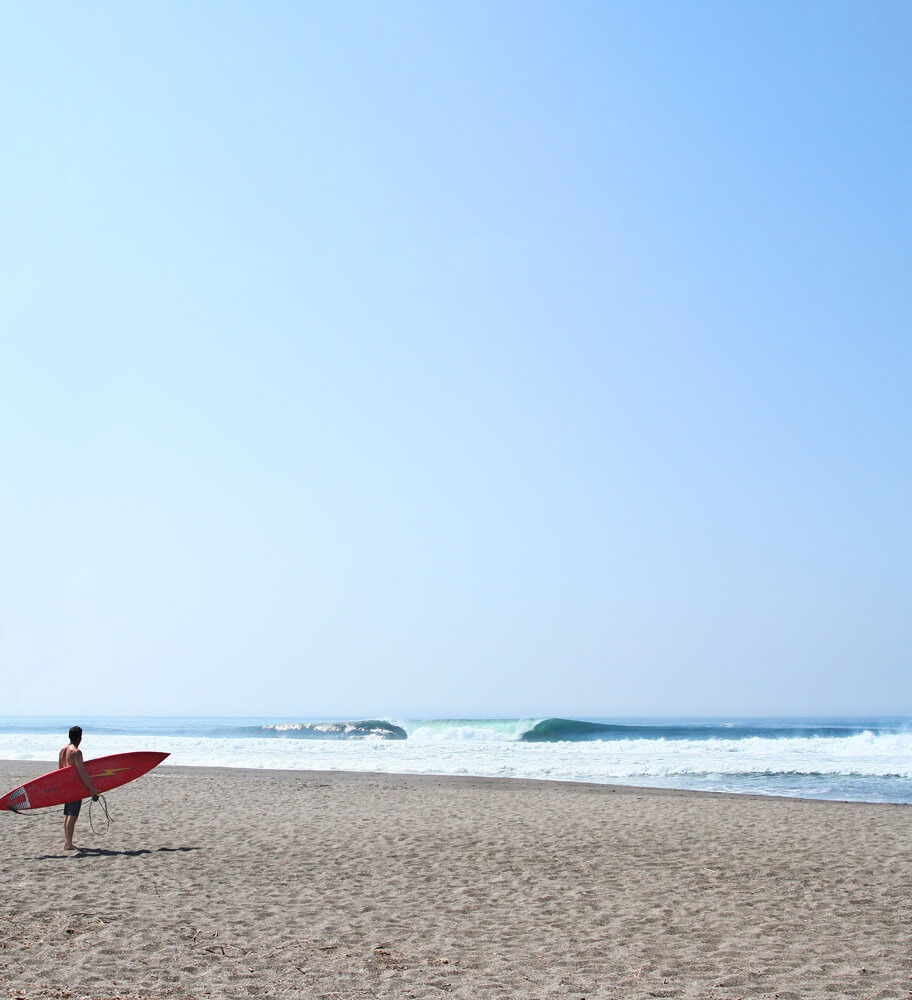
“We’d hop along the coast like that — no roads, just water access, living a full survival lifestyle. We were always welcomed wherever we stopped, and when the swell hit, the waves were unreal.”
Andrew continued to return to these very islands for the following seven years, camping and surfing empty, secluded reef breaks with close friends while the documentary was edited and prepared for its premiere in LA.


“When the first trailers for the documentary started to come out, I realised how political the whole thing was. I emailed the producers saying, ‘I didn’t sign up for this.’ There was a lot of resistance to what was happening in Papua, and I didn’t want to be part of that.”
Unbeknownst to Andrew, the documentary aimed to highlight the human rights atrocities and the illegal Indonesian occupation of West Papua, which were largely unknown to the outside world due to media restrictions. The film features indigenous locals talking about life-threatening issues, something Andrew only found out about at the premiere in LA.
“I remember I just watched it and thought, ‘Are you kidding me? This is bad for me.’ The documentary portrayed me as the driver of the political stuff, which wasn’t true. There were no interviews with me talking politics, but they painted me as a political figure.”
Andrew doesn’t deny the political tensions in the Papuan region — however, he had no idea that he was going to be used as an advocate for the issue, which is something that has subsequently stopped him from returning to the region.
“I haven’t been back since. I made good mates with the local families over the years, but I’m scared about how I’m represented and what the government might do. The film stated some people who blew the whistle there were killed.”
At this point in our conversation, I was thoroughly intrigued by Andrew’s appetite for adventure, and as our chat progressed, the stories became wilder.
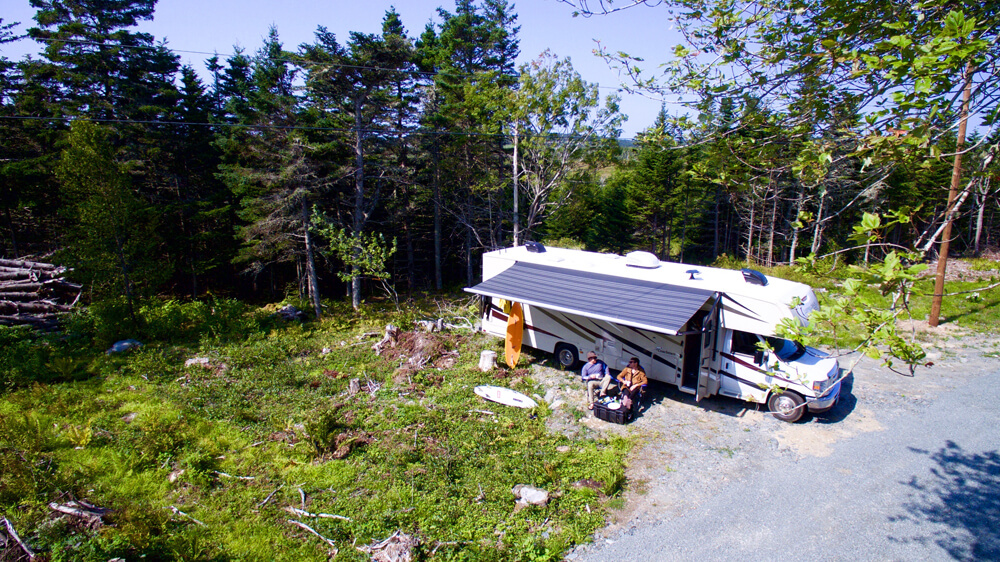
A few years back, Andrew was planning to travel to Canada for a wedding. In true best man fashion, he assumed the responsibility of organising the bucks party, which included a motorhome trip to Nova Scotia where they would camp out and surf the bachelor’s remaining days away.
“At first, everyone was keen — flights booked, plans made. But the closer it got to the wedding, the more people started pulling out. You know… ‘Can’t afford it’ or “It’s just too much of a mission.’ Hiring a motorhome over there was ridiculously expensive — like $6,000 USD for two weeks — and we were meant to split the cost!
“So, it was supposed to be this big group trip, but it ended up just being me, the groom, and my mate Owen Milne. The groom didn’t even know Owen at the time, but I had convinced him to hire him as the filmer for the trip and wedding.
“I started to feel pretty bad for my mate — no one else was coming, and we were still on the hook for the full cost of the RVs. Meanwhile, I was barely scraping by making the odd surfboard, and definitely not flush with cash.

“He was living on the Gold Coast at the time, and he flew down to stay with me before we all flew out to Canada the next morning — just me, him, and Owen. He’s one of those blokes who goes to bed early, so by 8pm he was out like a light. I turned to Owen and said, ‘Mate, I’ve got no idea what I’m going to do — I can’t pay for this motorhome, and I can’t bring myself to tell him.’
The pair were desperate not to make fools of themselves, and with the flight to Canada due to depart the following morning, they racked their brains, hoping for a miracle lightbulb moment that would save their skin.
“We came up with this idea out of desperation. We reached out to one of my mates, who was a photographer who did big-time work for brands, tourism boards, and government organisations. We messaged him at like 9pm and asked, ‘Hey, how do you line up gigs overseas? Got any tips?”
“He sent over one of his old pitch proposals, so we took that, swapped out his photos, and started building our own version. We threw on suits and took photos of each other — even holding piles of books to look more professional. It got ridiculous. We started writing the most over-the-top stuff. Like, Owen’s ‘an artist of imagery’, and that kind of thing — just absolutely taking the piss.”
The boys’ Hail Mary move was sent off to tens of email addresses in the early hours of the morning — from the Nova Scotia Government to Canadian RV companies. They sent their faux proposals off to anyone and everyone, praying for a lifeline.
“Then, just after midnight, we got a reply from Go RVing Canada. They were keen. They said, ‘We need you guys!’ We spun them this story that we had something else lined up that fell through, so this was our last-minute Plan B.
“They asked for a Skype meeting, so half asleep at 2am we were in suits on the couch, tightening our ties, having this call.”
The meeting finished around one hour before the boys were scheduled to depart for the airport, and the trip looked like it would be miraculously salvaged. When their flight departed, they still had no idea whether the RV company was going to follow through with the deal or not.
“We had to fly through Toronto on our way over. During the stopover, we checked our emails, and there it was — they’d written back, ‘Yep, we’ve got you an RV. We’ll pay you this amount and cover this much fuel.’
You can only imagine the reaction that ensued… The trip was back on, even though it was never really off, at least according to the groom.
“That’s how it all started. We did the trip, scored some incredible waves, and the wedding went off. For some reason, though, we didn’t want to go home afterwards. Owen was seeing a girl in the States at the time, so we thought, ‘Let’s head over there.’ We’d just been paid by the RV company and were on top of the world.”

Buzzing off their time in Canada, the boys continued to ride the wave of good fortune down to San Diego. They partied for five nights straight, much to the dismay of Owen’s girl at the time, who duly sent them on their way quick-smart.
“We called our mate Darrell Goodrum to see if we could stay with him. He went, ‘I’m down in Mexico. It’s going to be pumping in a couple of days — come down!’ So we thought, ‘Alright, let’s go.’
“We went straight from the San Diego nightclubs to the beach at Pascuales, and it was solid — about 15ft. Way heavier than any nightclub.”
Andrew and Owen eventually ran out of the funds and found themselves stranded in Mexico with only a few pesos to their names. But, staying true to form, the boys turned their lemons into lemonade once again.
“We didn’t know how we were going to pay the $60 USD per night hotel we were at for almost a month plus all the tabs we were racking up at the local restaurants. So, Owen made an edit of all the locals he’d been filming and sold it to Surfline and totally saved the day.
“We then met this bloke, George, who was down there on a surf trip before starting work on a cannabis farm. He was between jobs at the time and was in Mexico for one last surf trip before returning to the States for his new job.
“We became good mates with him, and he needed someone to drive his U-Haul truck back up to California. We were broke and needed a job, so he said, ‘Come up to Santa Cruz — I’ll get you work trimming.’
“By then, it was about two months into the trip. We drove back to San Diego, then all the way up to Santa Cruz with his gear.”
If you’re as surprised as I am about where this trip has gone, then wait till you hear what happens next.

“We’d started filming a documentary around the legalisation of marijuana while at the cannabis farm, as legalisation was kicking in across California on January 1, and we thought we could make some extra coin from it.
“We ended up getting involved with all these pro cannabis politicians, farmers, and this group called WAMM — Women and Men for Medical Marijuana.
“They were legends — they’d been fighting for legalisation since the 60s and 70s and had even taken the government to court (and won). The main lady from WAMM found out about our doco and took us under her wing. Suddenly, all these doors were opening.”
Andrew and Owen were invited to the WAMM’s Thanksgiving dinner, where they were handed two joints upon entry to the function.
“We were just like, ‘What the hell is going on?’
“We didn’t know anyone, so we sat up the back, nervously puffing away — neither of us big smokers. Then Valerie started her speech, welcomed everyone, and suddenly went, ‘We’ve got two special guests tonight — we’d like to welcome them up to the front.’ Owen and I just froze.
“Next thing, we’re up there, both absolutely freaking out, trying to explain how we were making this documentary, holding these huge joints while speaking in front of a hall full of people — including kids who were using cannabis for medical reasons.”
The old saying goes, ‘Fake it till you make it,’ and that became the mantra for Andrew and Owen’s
trip as they continued to turn lemons into sparkling, golden, magical lemonade. Even when they arrived back Down Under, the wave of fortune just kept on giving.


“The Canada RV guys were still emailing us, saying, ‘When are you coming back? We need you to capture the West Coast now.’”
Some people’s most defining trait is their optimism — their ability to turn nothing into something. Andrew’s openness to new opportunities and willingness to learn have landed him in some of the most unforgettable circumstances, and we can’t help but admire him for it.
He has always been regarded as one of the most complete surfers of his generation, never looking out of place whether it’s 1ft or 20ft. His experience and knowledge in both board shaping and wave riding are mirrored through his brand, Serpent Sleds.
Andrew’s surfing versatility allows him to personally test each model that comes out of the serpent’s den, which includes small-wave grovelers to hog-hunting guns. What a legend.